
Generalizing the Warburg impedance to a Warburg impedance matrix
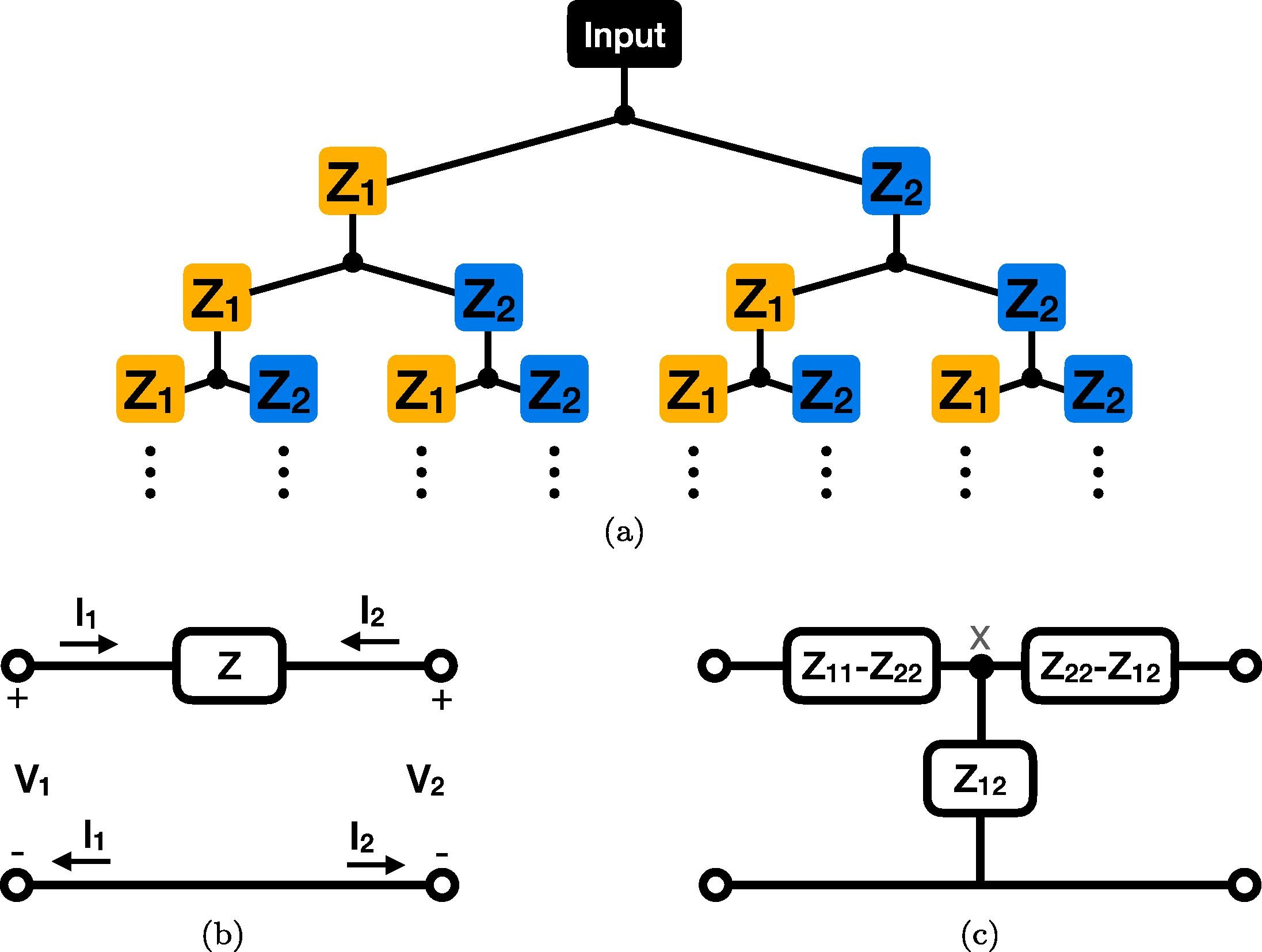
We seek to generalize and study the well-known Warburg impedance element, which has an impedance proportional to 1/s (s=jω is the complex frequency), to a two-port impedance network. For this purpose, we consider an infinite binary tree structure inside which each impedance is treated as a two-port network. We obtain a Warburg impedance matrix, which is both symmetrical and reciprocal, and study its equivalent circuit behavior. Interestingly, the equivalent circuit contains two resistors and a Cole–Davidson type impedance proportional to 1+2/(τs), where τ is a time constant. Simulation results
Procedure for Obtaining the Analytical Distribution Function of Relaxation Times for the Analysis of Impedance Spectra Using the Fox H-Function
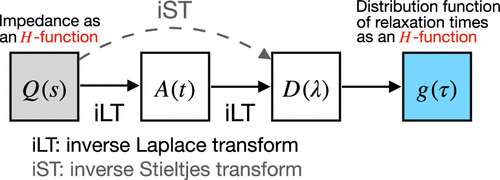
The interpretation of electrochemical impedance spectroscopy data by fitting them to equivalent circuit models has been a standard method of analysis in electrochemistry. However, the inversion of the data from the frequency domain to a distribution function of relaxation times (DFRT) has gained considerable attention for impedance data analysis as it can reveal more detailed information about the underlying electrochemical processes without requiring a priori knowledge. The primary purpose of this paper is to provide a general and practical procedure for obtaining analytically the DFRT from
A computational flow model of oxygen transport in the retinal network
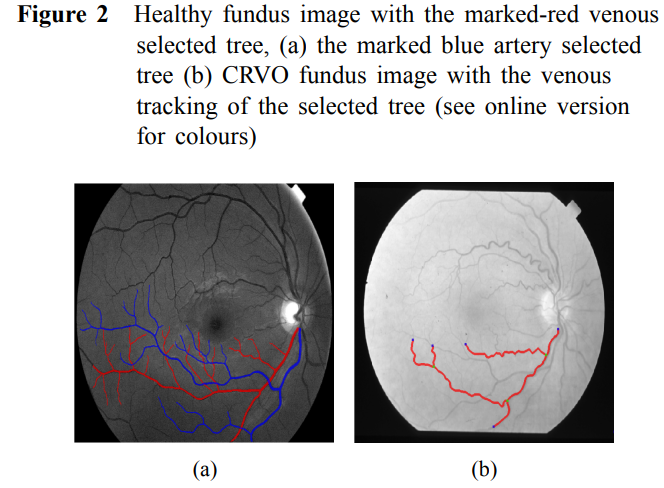
The retina's high oxygen demands and the retinal vasculature's relatively sparse nature are assumed to contribute to the retina's specific vulnerability to vascular diseases. This study has been designed to model the oxygen transport in physiologically realistic retinal networks. A computational fluid dynamics study has been conducted to investigate the effect of topological changes on the oxygen partial pressure distribution in retinal blood vessels. The Navier Stokes equations for blood flow and the mass transport equation for oxygen have been coupled and solved simultaneously for the
Parallel and independent true random bitstreams from optical emission spectra of atmospheric microplasma arc discharge
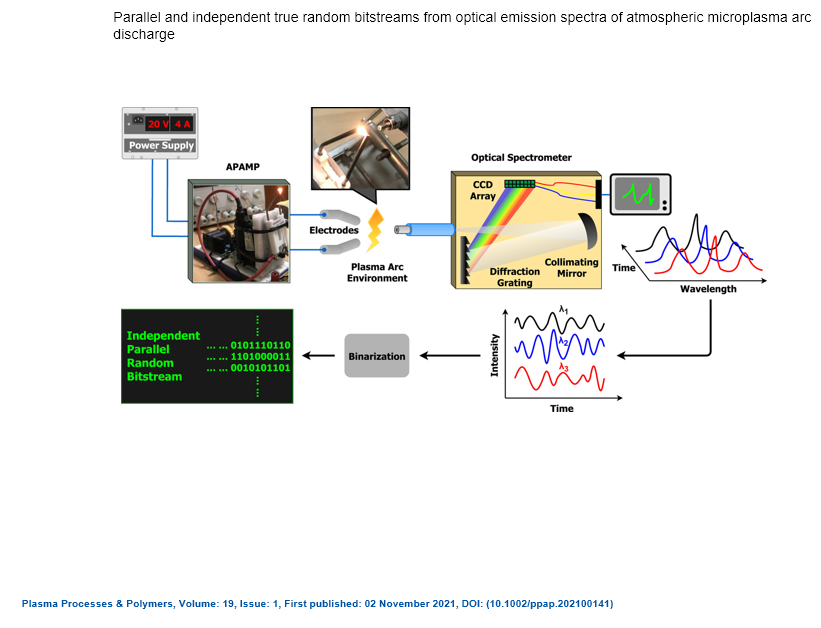
In this study, we propose the possibility of generating several parallel and independent random bitstreams from the time-varying optical emission spectra of an atmospheric pressure air microplasma system. This is achieved by splitting the plasma arc emission into discrete wavelengths using an optical spectrometer and then monitoring the fluctuating intensities of each wavelength as an independent time series. As a proof of concept, we considered eight wavelengths centered at 377.8, 389.1, 425.8, 591.4, 630.5, 673.0, 714.2, and 776.4 nm corresponding to atomic emissions lines from species
Comparison and database development of four recent ASM3 model extensions
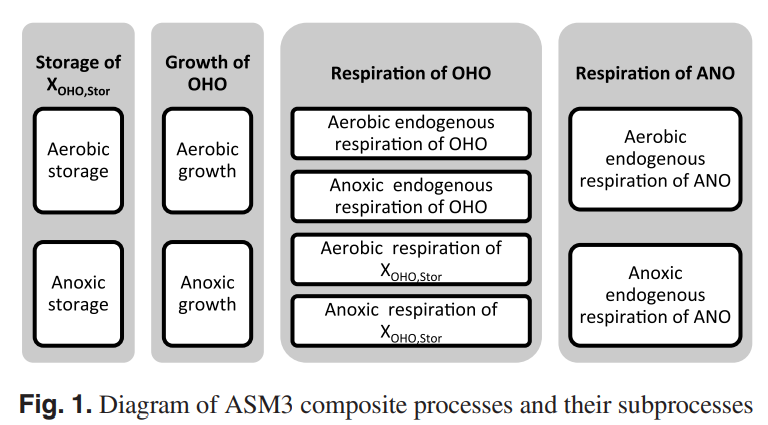
In the last decade, many Activated Sludge Model No. 3 (ASM3) extensions were proposed to adopt new concepts such as simultaneous storage and growth of heterotrophic organisms and two-step nitrification-denitrification processes. From these ASM3 model extensions, four are included in this study: ASM3 with two-step nitrification-denitrification, ASM3 for simultaneous autotrophic and heterotrophic storage-growth, ASM3 extension for two-step nitrification-denitrification, and ASM3 for simultaneous storage-growth and nitrification-denitrification. The four models are analyzed and compared to the

A Stochastic Modeling of the Gain in Waveguide Avalanche Photodetectors (WG-APDs)
Waveguide photodetectors are considered as a promising candidate for high speed photodetection where the tradeoff between the transit time bandwidth and the quantum efficiency is overcome as the incident optical signal and the photogenerated carriers move in perpendicular directions. In WG-Avalanche Photodetectors (WG-APDs), the avalanche multiplication gain enhances the photocurrent of the photodiodes. In these photodiodes, the inaccuracies in the ionizations coefficients of the photogenerated electrons and holes and in the dimensions of the multiplication layer affect the multiplication gain
Aging effect on apples bio-impedance using AD5933
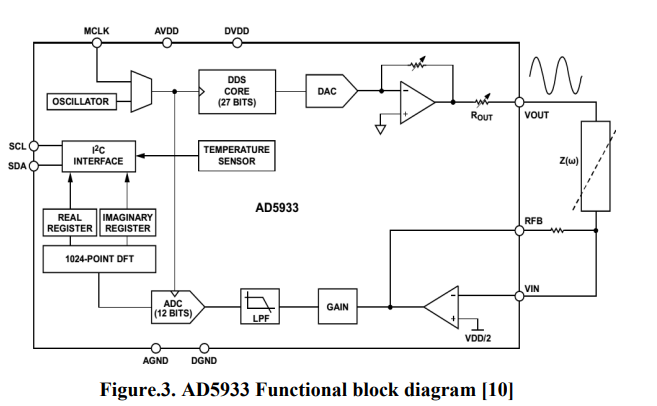
In this paper, the effect of the fruits aging on bio-impedance is experimentally studied. Bio-impedance analysis, as accurate and fast method is used to investigate and monitor group of apples properties during aging. This method provides an alternative method for investigating apples physical properties that are highly related to chemical properties. AD5933 impedance analyzer chip within the frequency range (5 KHz-100 KHz) and NI-ELVIS board within the frequency range (300 Hz-5 KHz) are used to investigate the changes in apple's properties during aging. According to experimental results, the

A Scalable Firmware-Over-The-Air Architecture suitable for Industrial IoT Applications
This paper proposes a reliable and scalable architecture for firmware-over-the-air updates, which provides remote cloud real-time distribution of new firmware versions on industrial machines in an efficient simultaneous manner. The architecture comprises remotely interconnected software and hardware systems for handling the procedures of firmware distribution over a wireless network. The main contributions are developing a special boot-loader for ARM micro-controllers and an Android application for performing FOTA updates. A simulation is performed using Web and Android applications showing
Inverse memrsitor emulator active Realizations
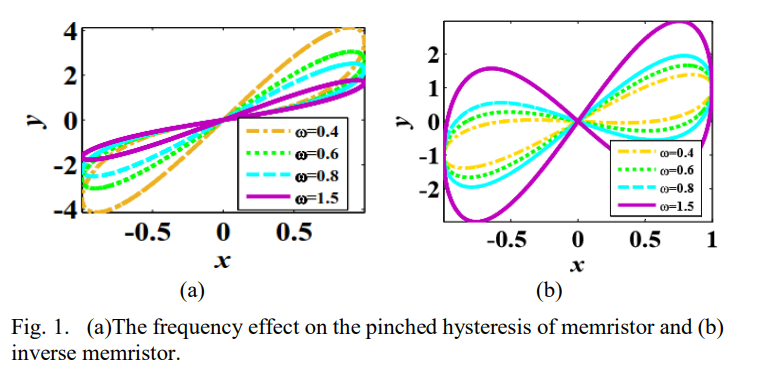
The paper aims to propose three different inverse memristor emulators based on serveral active blocks. One of the presented emulator realizes employing second generation current conveyor (CCII) andcanalog voltage multiplier with passive elements. The other two introduced emulators are designed using cureent feedback operational amplifier (CFOA) with two switches or two BJT transistor. One of the proposed emulators has the advantages that it switches between the inverse and memristor at the same time but in different frequency with less number of components. The introduced circuitry are
IoT ethics challenges and legal issues
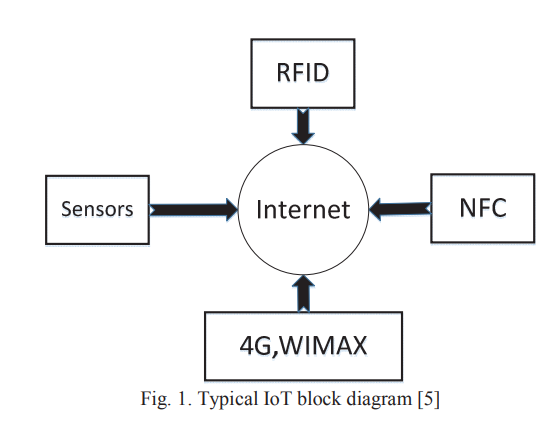
IoT systems have different technologies such as: RIFD, NFC, 3G, 4G, and Sensors. Their function is to transfer very large sensitive and private data. There are many ethical challenges that need to be taken into consideration by individuals and companies that use this technology. Amongst the challenges is the user awareness of attack risks. This paper discusses different ethical and legal challenges that need to be taken in account for IoT health care applications during the near future. © 2017 IEEE.