
Fractional-Order Filter Design
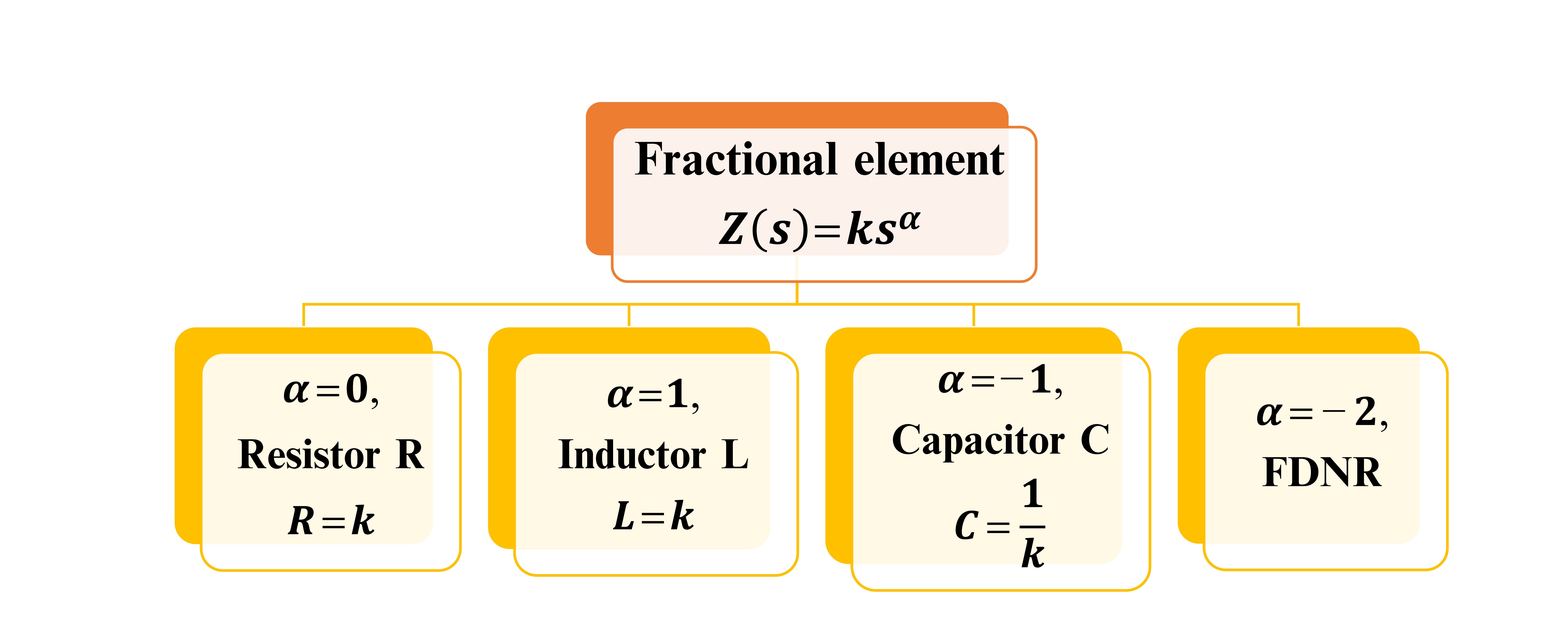
One of the advantages of fractional order is the extra degree of freedom added by the fractional-order parameters, which enrich the analysis with more details in new dimensions. This chapter introduces factional-order conventional filters of orders α, 2α, and 3α. The general transfer functions of continuous-time filters (low-pass, high-pass, and band-pass filters) to the noninteger-order (fractional-order) domain are investigated. Also, mathematical expressions for the maximum and minimum frequencies, the half power frequencies, and the right-phase frequencies are derived. In addition, the
Reconfigurable hardware implementation of K-nearest neighbor algorithm on FPGA
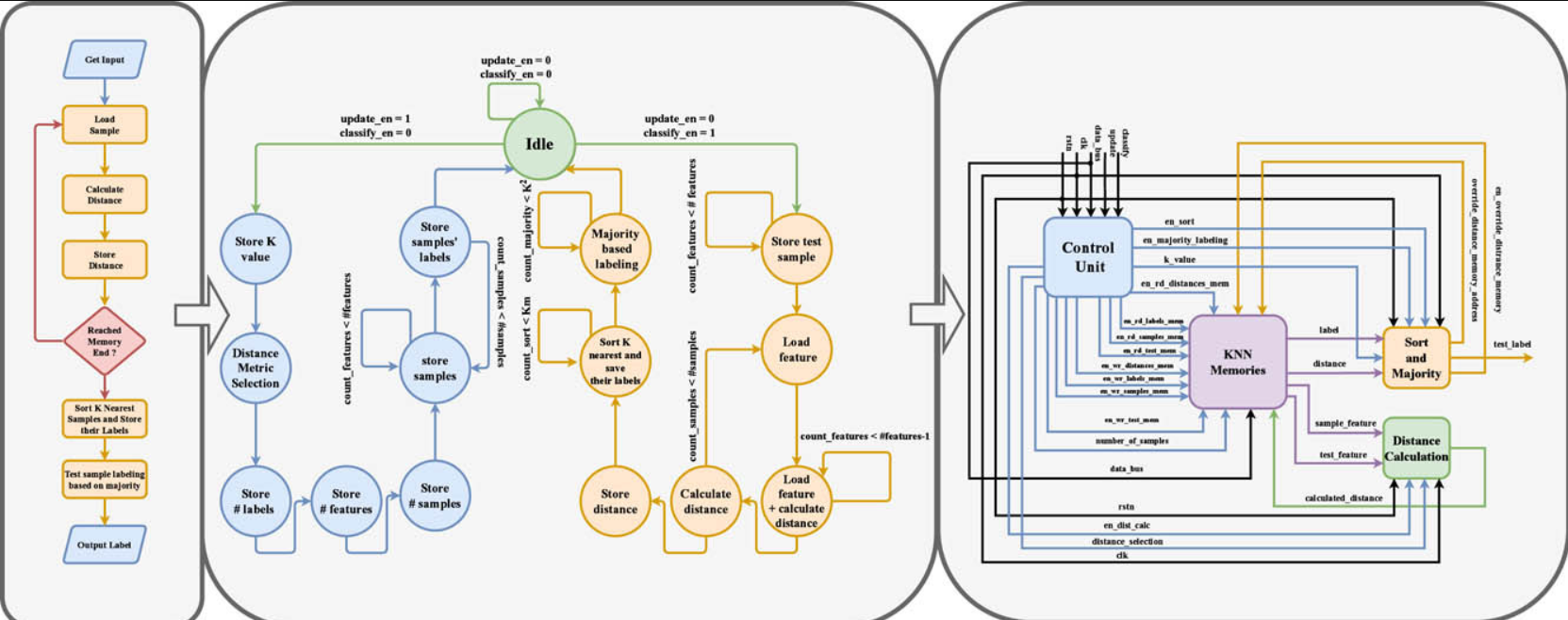
Nowadays, Machine Learning is commonly integrated into most daily life applications in various fields. The K Nearest Neighbor (KNN), which is a robust Machine Learning algorithm, is traditionally used in classification tasks for its simplicity and training-less nature. Hardware accelerators such as FPGAs and ASICs are greatly needed to meet the increased requirements of performance for these applications. It is well known that ASICs are non-programmable and only fabricated once with high expenses, this makes the fabrication of a complete chip for a specific classification problem inefficient
Deep Neural Networks-Based Weight Approximation and Computation Reuse for 2-D Image Classification
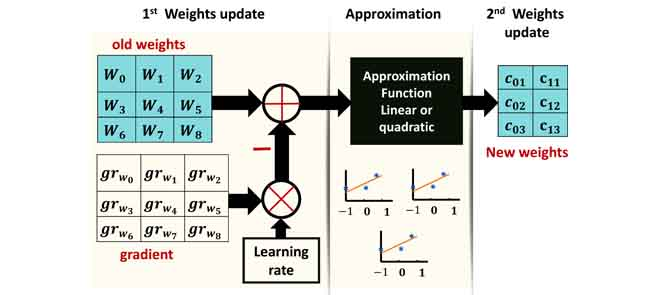
Deep Neural Networks (DNNs) are computationally and memory intensive, which present a big challenge for hardware, especially for resource-constrained devices such as Internet-of-Things (IoT) nodes. This paper introduces a new method to improve DNNs performance by fusing approximate computing with data reuse techniques for image recognition applications. First, starting from the pre-Trained network, then the DNNs weights are approximated based on the linear and quadratic approximation methods during the retraining phase to reduce the DNN model size and number of arithmetic operations. Then, the
Extended RC Impedance and Relaxation Models for Dissipative Electrochemical Capacitors
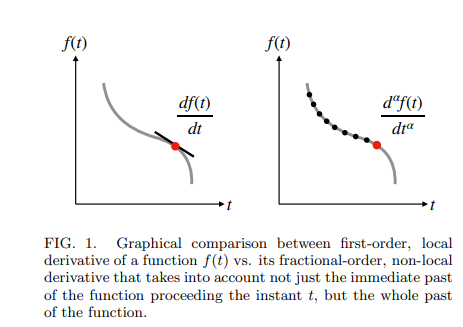
Electrochemical capacitors are a class of energy devices in which complex mechanisms of accumulation and dissipation of electric energy take place when connected to a charging or discharging power system. Reliably modeling their frequency-domain and time-domain behaviors is crucial for their proper design and integration in engineering applications, knowing that electrochemical capacitors in general exhibit anomalous tendency that cannot be adequately captured with the traditional RC-based models. In this study, we first review some of the widely used fractional-order models for the
Artificial neural network for PWM rectifier direct power control and DC voltage control
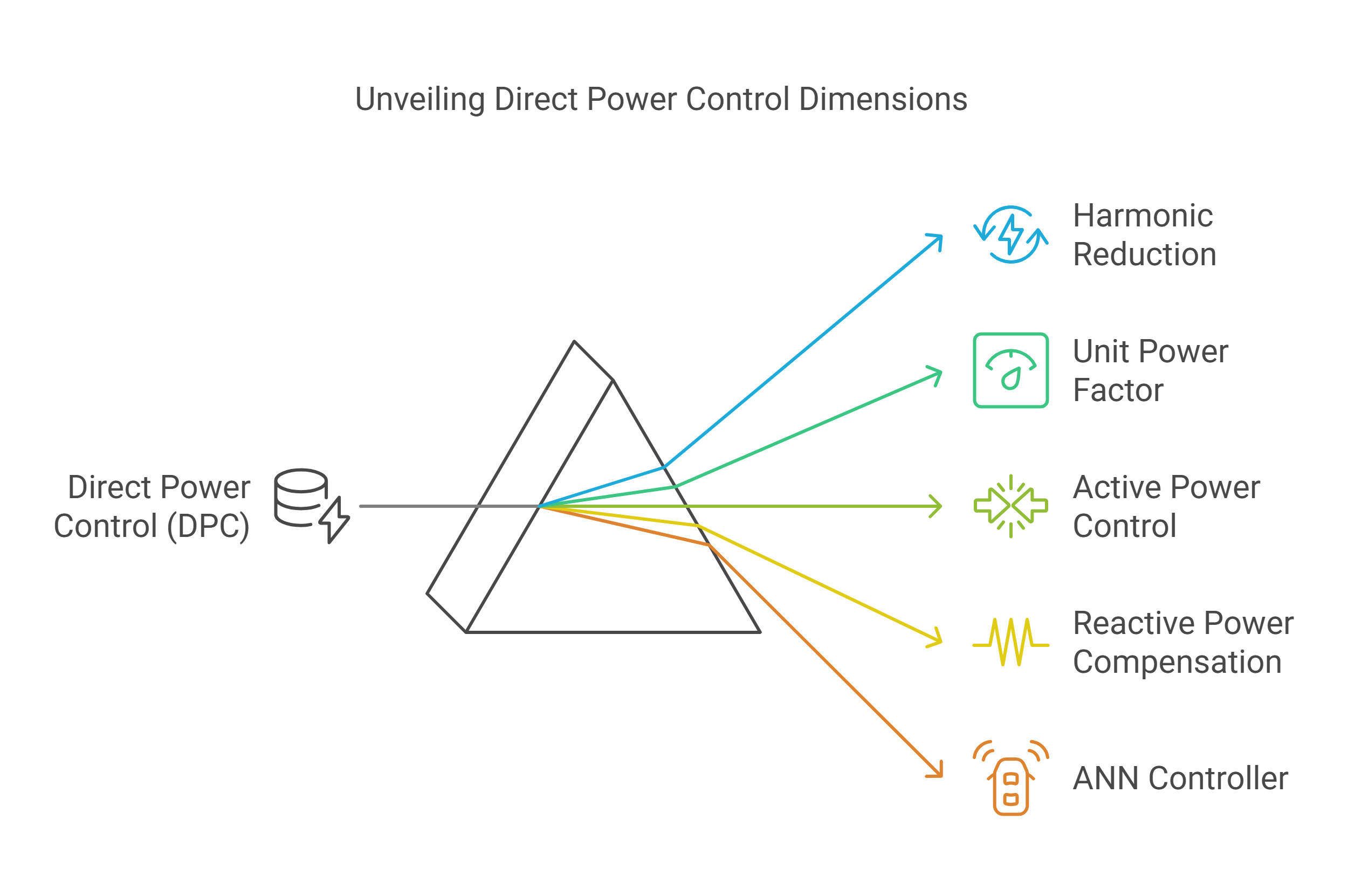
In this chapter, a new technique has been proposed for reducing the harmonic content of a three-phase PWM rectifier connected to the networks with a unit power factor and also providing decoupled control of the active and reactive instantaneous power. This technique called direct power control (DPC) is based on artificial neural network (ANN) controller, without line voltage sensors. The control technique is based on well-known direct torque control (DTC) ideas for the induction motor, which is applied to eliminate the harmonic of the line current and compensate for the reactive power. The
Electrical Impedance Spectroscopy Using a Wide-Band Signal Based on the Rudin-Shapiro Polynomials
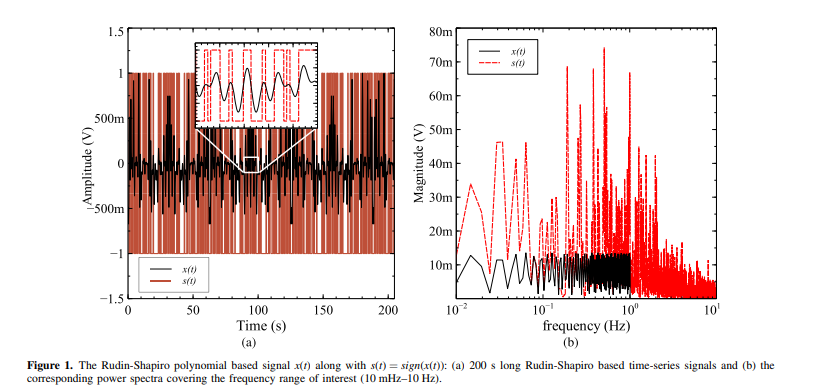
Electrochemical Impedance Spectroscopy (EIS) has become an increasingly important diagnostic and monitoring tool in many industries. An obstacle that arises when employing EIS in low and ultra low sub-Hz frequencies is the long measurement time associated with using the conventional frequency-sweep method. One possible solution to this problem is to use wide-band signals that cover at once the entire frequency range of interest. In this work, we explore and validate the use of such a signal obtained from the Rudin-Shapiro polynomial over the frequency range 10 mHz to 10 Hz. The proposed signal
DT2CAM: A Decision Tree to Content Addressable Memory Framework
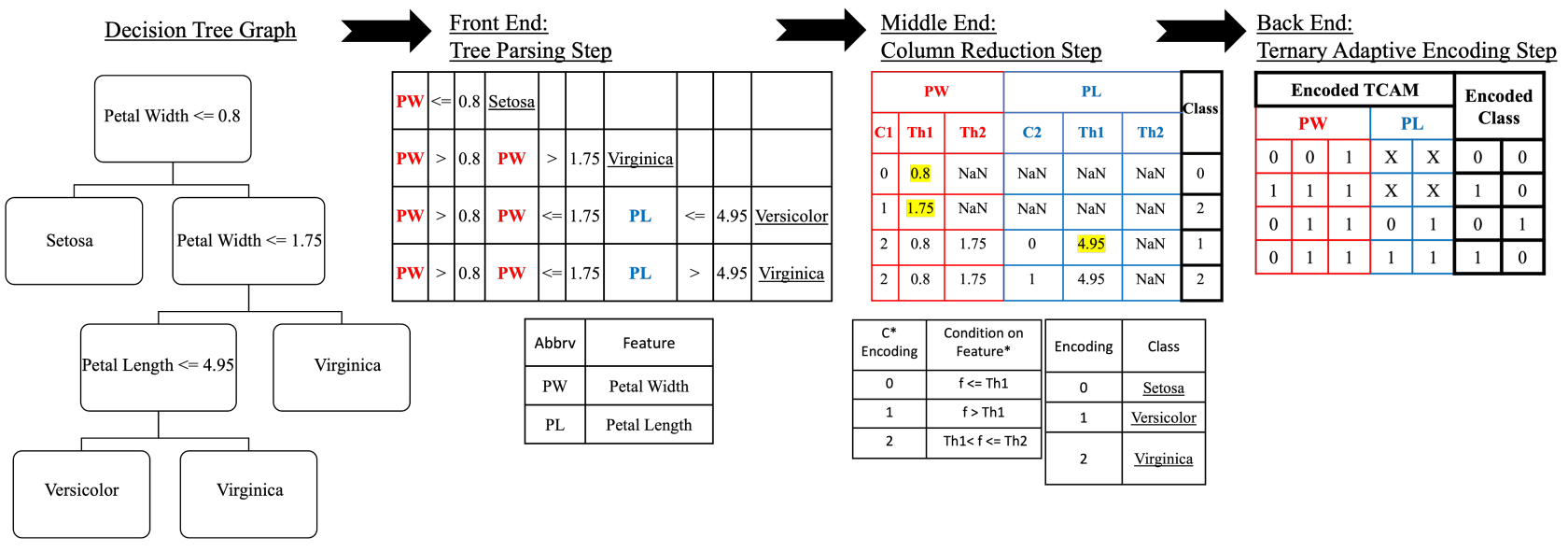
Decision trees are powerful tools for data classification. Accelerating the decision tree search is crucial for on-the-edge applications with limited power and latency budget. In this article, we propose a content-addressable memory compiler for decision tree inference acceleration. We propose a novel 'adaptive-precision' scheme that results in a compact implementation and enables an efficient bijective mapping to ternary content addressable memories while maintaining high inference accuracies. We also develop a resistive-based functional synthesizer to map the decision tree to resistive
Commercial Versus Natural Activated Carbon Fabricated Sheets: Applied to Dyes Removal Application
Industrial dyes are considered one of the main causes of increased water pollution of water. Many businesses, such as steel and paper, are located along riverbanks because they require large amounts of water in their manufacturing processes, and their wastes, which contain acids, alkalis, dyes, and other chemicals, are dumped and poured into rivers as effluents. For example, chemical enterprises producing aluminum emit a significant quantity of fluoride into the air and effluents into water bodies. Fertilizer facilities produce a lot of ammonia, whereas steel plants produce cyanide. Many

CNTFET-based ternary address decoder design
With the end of Moore's law, new paradigms are investigated for more scalable computing systems. One of the promising directions is to examine the data representation toward higher data density per hardware element. Multiple valued logic (MVL) emerged as a promising system due to its advantages over binary data representation. MVL offers higher information processing within the same number of digits when compared with binary systems. Accessing memory is considered one of the most power- and time-consuming instructions within a microprocessor. In the quest for building an entire ternary
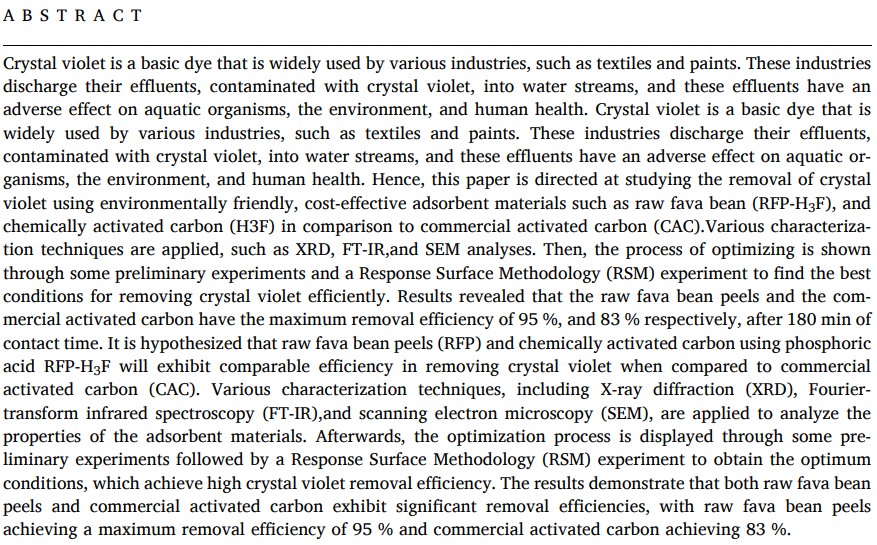
Enhanced removal of crystal violet using rawfava bean peels, its chemically activated carbon compared with commercial activated carbon
Crystal violet is a basic dye that is widely used by various industries, such as textiles and paints. These industries discharge their effluents, contaminated with crystal violet, into water streams, and these effluents have an adverse effect on aquatic organisms, the environment, and human health. Crystal violet is a basic dye that is widely used by various industries, such as textiles and paints. These industries discharge their effluents, contaminated with crystal violet, into water streams, and these effluents have an adverse effect on aquatic organisms, the environment, and human health