
Filter by
MOS realizations of fractional-order elements
The exploitation of fractional calculus in engineering applications requires the utilization of fractional-order elements. As there is no immediate access to such type of elements, emulators that proportionally imitate their behavior are developed. The realization of emulators of fractional-order elements is based on the approximation of their impedance function. Subsequently, an advantageous
A collection of interdisciplinary applications of fractional-order circuits
An attractive feature of fractional calculus is its application in various interdisciplinary fields, extending from biomedical and biological notions to mechanical properties. For their description, fractional-order models have outperformed the corresponding integer-order models, resulting in a more realistic behavior, due to the additional degrees of freedom offered and the long-term memory
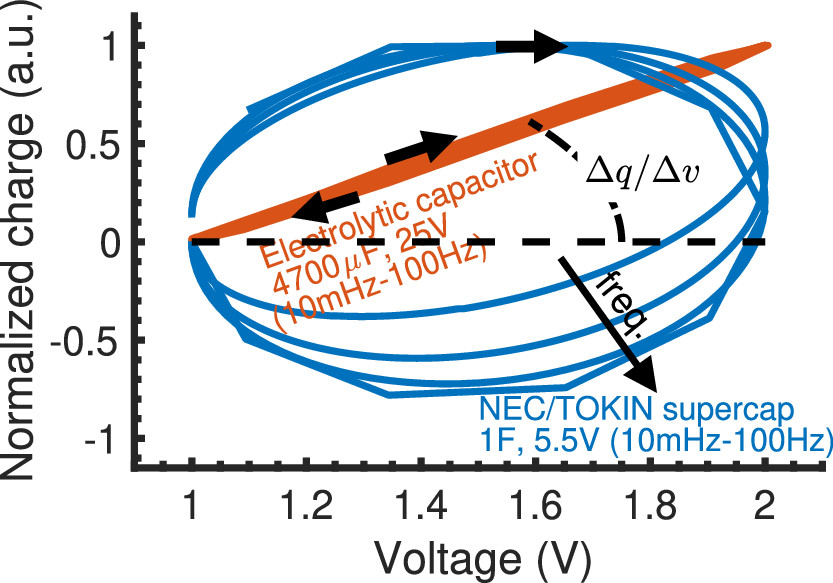
Highlighting a Common Confusion in the Computation of Capacitance of Electrochemical Energy Storage Devices
[No abstract available]

Design of low-voltage FO-[PD] controller for motion systems
Fractional-order controllers have gained significant research interest in various practical applications due to the additional degrees of freedom offered in their tuning process. The main contribution of this work is the analog implementation, for the first time in the literature, of a fractional-order controller with a transfer function that is not directly constructed from terms of the

A Novel Power-Aware Task Scheduling for Energy Harvesting-Based Wearable Biomedical Devices Using FPA
Power management and saving in energy harvesting-based biomedical wearable devices are mandatory to ensure prolonged and stable operation under a stringent power budget. Thus, power-aware task scheduling can play a key role in minimizing energy consumption to improve system durability while maintaining device functionality. This paper proposes a novel biosensor task scheduling for optimizing

On-the-Fly Parallel Processing IP-Core for Image Blur Detection, Compression, and Chaotic Encryption Based on FPGA
This paper presents a 3 in 1 standalone FPGA system which can perform color image blur detection in parallel with compression and encryption. Both blur detection and compression are based on the 3-level Haar wavelet transform, which is used as a common building block to save the resources. The compression is based on performing the hard thresholding scheme followed by the Run Length Encoding (RLE)
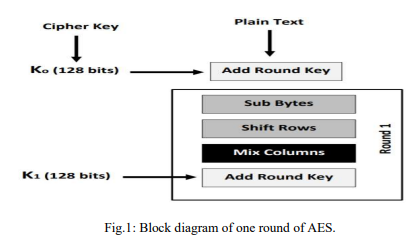
Generation of the chaotic keys on the fly for AES encryption system
This paper proposes a safe and effective method to generate the subkeys that are used in the Advanced Encryption Standard (AES) algorithm for data encryption applications. The suggested method relies upon the Pseudo-Random Number Generator (PRNG) that is created from the improved Lorenz chaotic system. The output of PRNG is exploited as a key schedule for generating AES subkeys where the output is

Design and FPGA Verification of Custom-Shaped Chaotic Attractors Using Rotation, Offset Boosting and Amplitude Control
This brief proposes a method of generating custom-shaped attractors, which depends on a planarly rotating V-shape multi-scroll chaotic system with offset boosting and amplitude control, and its FPGA verification. The proposed planarly rotating, translational (offset boostable), and scalable (amplitude controllable) system exhibits a wide basin of attraction and can cover the whole space
A switched chaotic encryption scheme using multi-mode generalized modified transition map
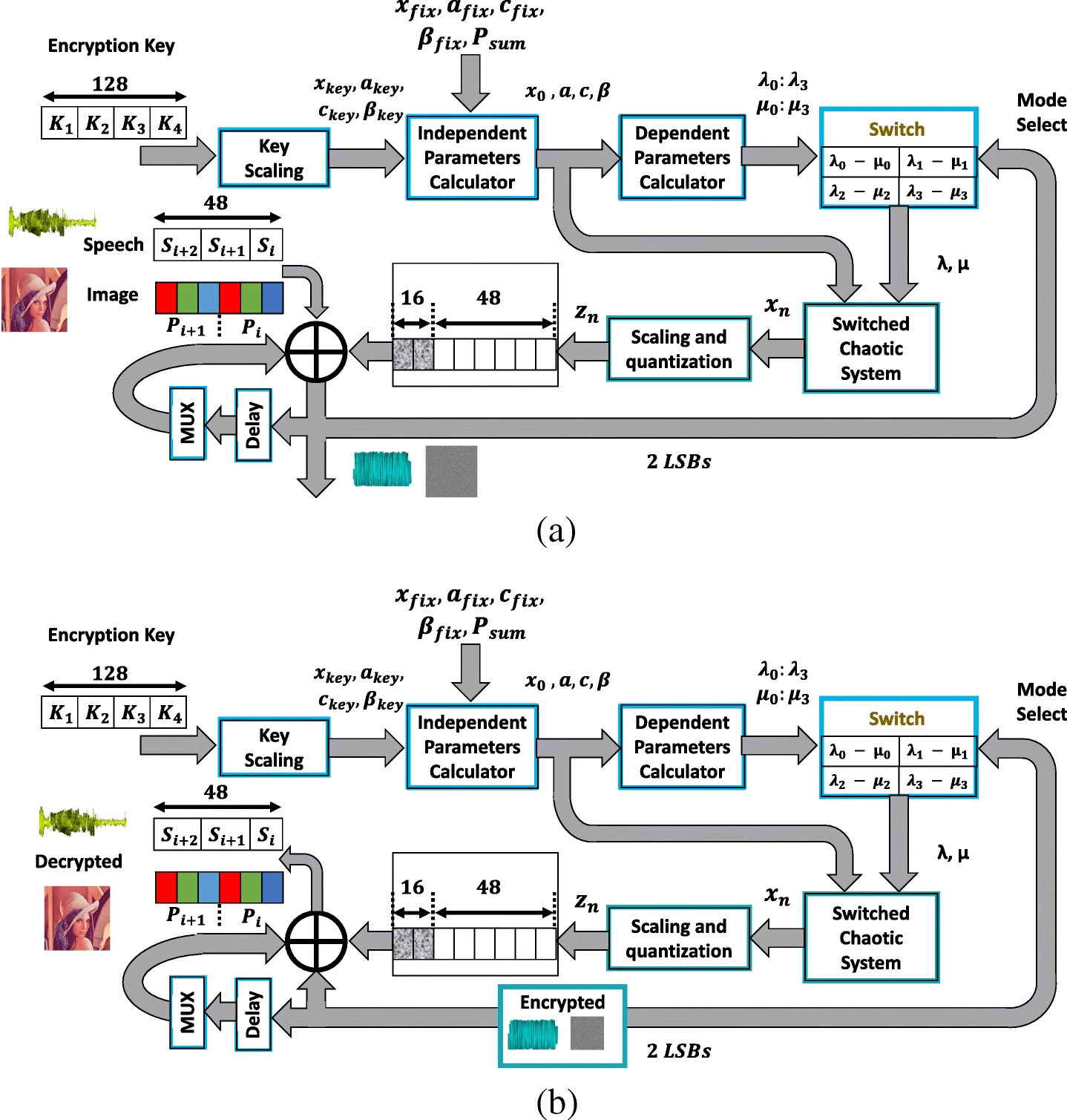
This paper presents a multi-mode generalized modified transition chaotic map and a switched chaotic encryption scheme based on it. Eight different modes of operation can be selected based on the map graph (concave or convex), the range modification procedure (shrinking or widening) and the sign of one of its independent parameters. The generalization and modification preserve the controllability
Novel Double-Dispersion Models Based on Power-Law Filters
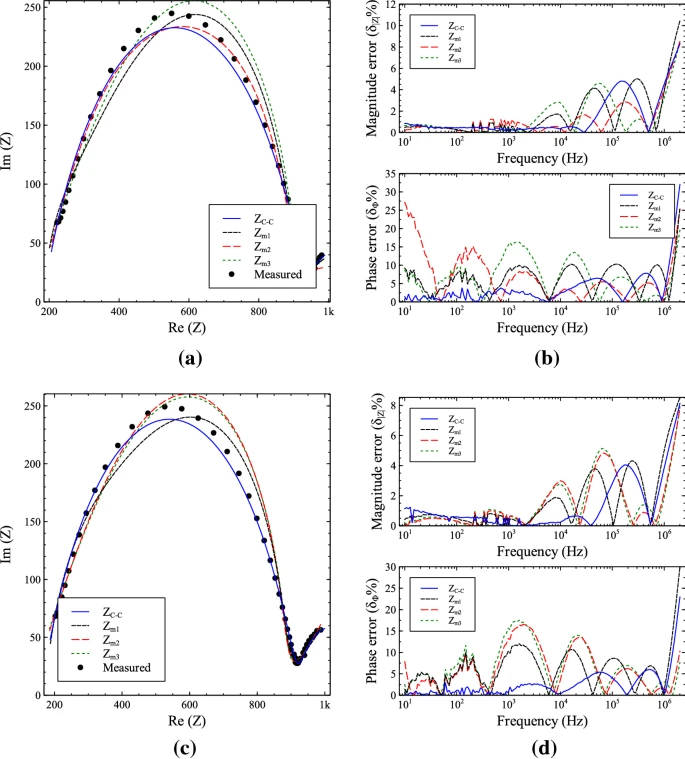
Novel double-dispersion models based on power-law filters are introduced in this work. These models are based on standard first-order and/or second-order low-pass filter transfer functions (denoted as mother functions) and do not require the employment of the fractional-order Laplacian operator. An attractive benefit, from the flexibility point of view, is that the number of parameters, which must