
Filter by
Modified methods for solving two classes of distributed order linear fractional differential equations
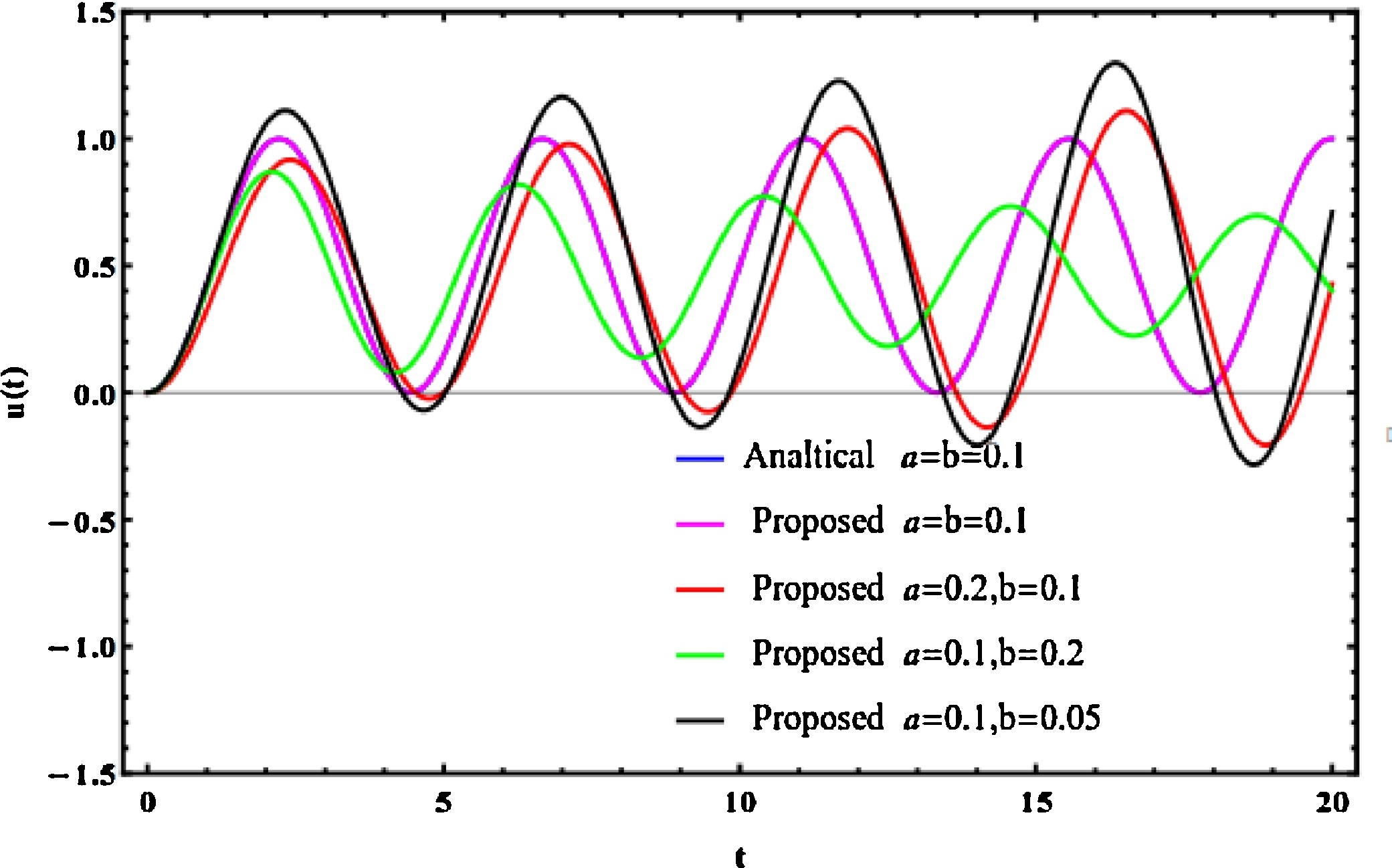
This paper introduces two methods for the numerical solution of distributed order linear fractional differential equations. The first method focuses on initial value problems (IVPs) and based on the αth Caputo fractional definition with the shifted Chebyshev operational matrix of fractional integration. By applying this method, the IVPs are converted into simple linear differential equations which
Speech encryption using generalized modified chaotic logistic and tent maps
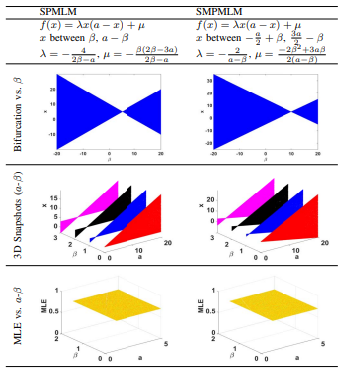
This paper presents a speech encryption application, which utilizes several proposed generalized modified discrete chaotic maps based on the logistic and tent maps for pseudo-random number generation. The generalization scales the output range and the key space. The modification controls the bounds on the output range through a parameter such that chaotic output exists for almost all values of the
Short-term memory in electric double-layer capacitors
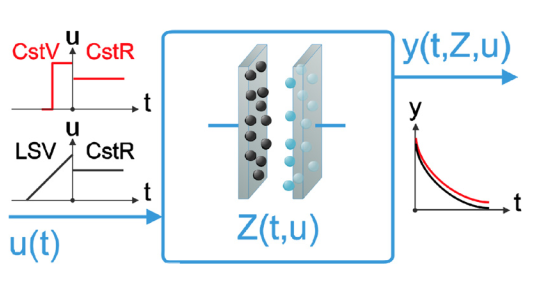
Shared by various physical, chemical, and biological systems, fractional-order dynamics assert that the present state of a system is the result of not only the applied stimulus but also its past history. Consequently, in fractional-order systems, there exists a system-specific, input-dependent memory kernel. In this study, we demonstrate experimentally the existence of a memory effect in electric
True random bit generators based on current time series of contact glow discharge electrolysis
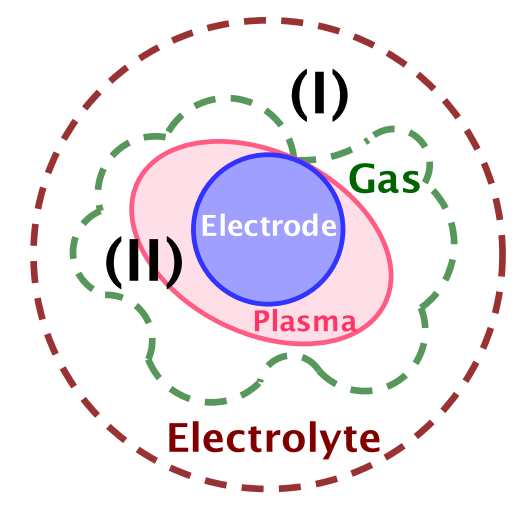
Random bit generators (RBGs) in today's digital information and communication systems employ a high rate physical entropy sources such as electronic, photonic, or thermal time series signals. However, the proper functioning of such physical systems is bound by specific constrains that make them in some cases weak and susceptible to external attacks. In this study, we show that the electrical
Conditions and Emulation of Double Pinch-off Points in Fractional-order Memristor
Recently, double pinch-off points have been discovered in some memristive devices where the I-V hysteresis curve intersects in two points generating triple lobes. This paper investigates a fractional-order flux-controlled mathematical model which is able to develop the multiple pinch-off points or multiple lobes. The conditions for observing double pinch-off points (triple lobes) are derived in
Mathematical techniques of fractional order systems : A volume in advances in nonlinear dynamics and chaos (ANDC)
Mathematical Techniques of Fractional Order Systems illustrates advances in linear and nonlinear fractional-order systems relating to many interdisciplinary applications, including biomedical, control, circuits, electromagnetics and security. The book covers the mathematical background and literature survey of fractional-order calculus and generalized fractional-order circuit theorems from
A generalized family of memristor-based voltage controlled relaxation oscillator
Recently, memristive oscillators are a significant topic in the nonlinear circuit theory where there is a possibility to build relaxation oscillators without existence of reactive elements. In this paper, a family of voltage-controlled memristor-based relaxation oscillator including two memristors is presented. The operation of two memristors-based voltage relaxation oscillator circuits is
Fractional-Order Relaxation Oscillators Based on Op-Amp and OTRA
This paper introduces closed formulas of two topologies of fractional-order relaxation oscillators. One of these topologies is based on Operational Amplifier (Op-Amp) and the other one depends on Operational Operational Trans-Resistance Amplifier (OTRA). Special cases for each topology are also provided. The advantage of these designs comes from the added extra degree of freedom presented by the
Comparison between three approximation methods on oscillator circuits
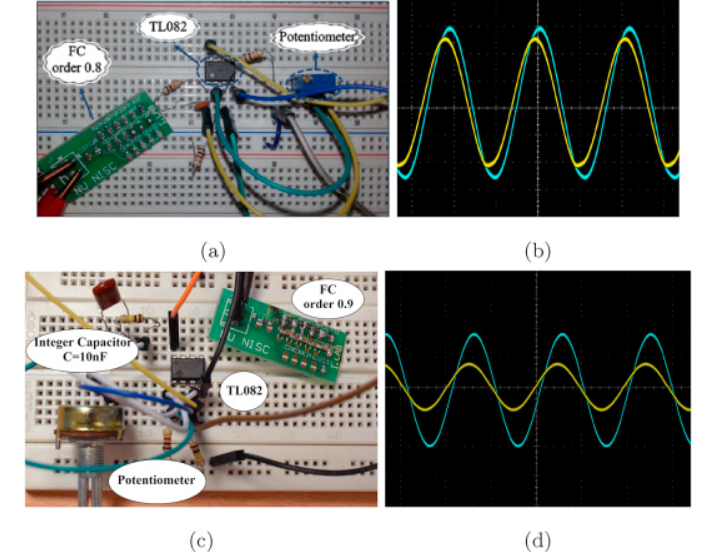
The promising capabilities of fractional-order devices challenge researchers to find a way to build it physically. Approximating the Laplacian operator sα can pave the way to emulate the fractional-order devices till its off-the-shelf appearance. This paper introduces three approximations of the Laplacian operator sα: Oustaloup, Matsuda, and Valsa by comparing their behaviors through two types of
FPGA Implementation of X- and Heart-shapes Controllable Multi-Scroll Attractors
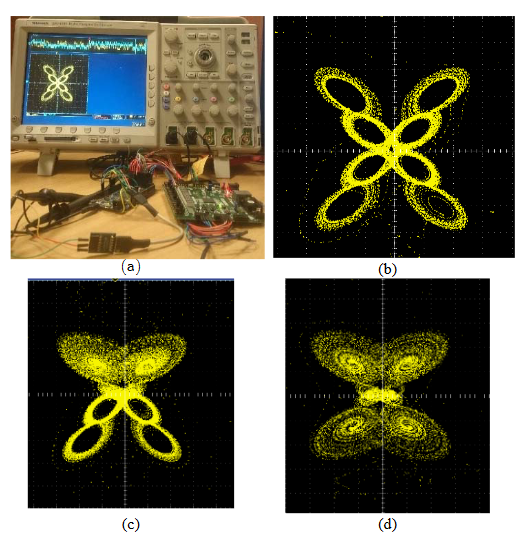
This paper proposes new multi-scrolls chaotic systems which is called the X-shape. The purpose is to have more complex systems and flexible ranges of the chaotic behavior. The proposed X-shape is a combination between V-shape and Λ-shape. This paper also represents the Heart-shape which considered a special case of the X-shape. The system complexity has been measured by MLE and compared with V