
Filter by
Fractional-Order Model (FOM) for high-strength substrate biodegradation in conventional UASB reactor
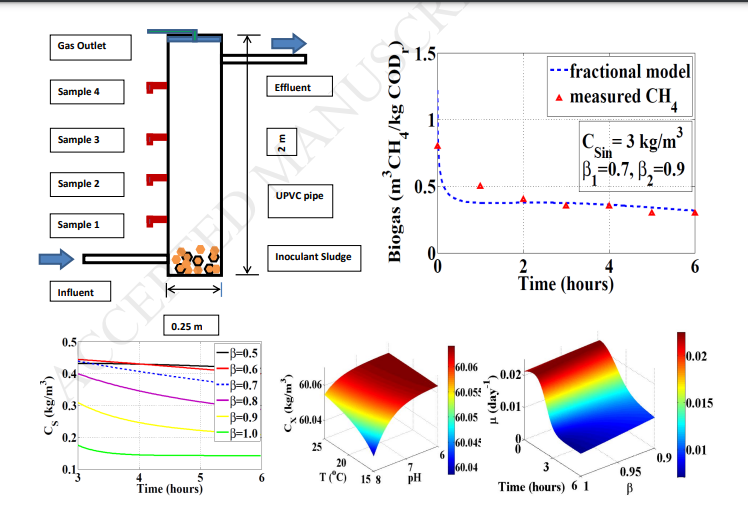
This paper introduces a Fractional-Order Model (FOM) of Up-flow Anaerobic Sludge Blanket (UASB) reactor for wastewater treatment regarding high-strength substrate biodegradation. The model can investigate the biogas production rate as well as the specific growth rate of bacteria with extra degree of freedom. Also, the hereditary effect of resident biomass on substrate degradation is studied on
Noise-estimation-based anisotropic diffusion approach for retinal blood vessel segmentation
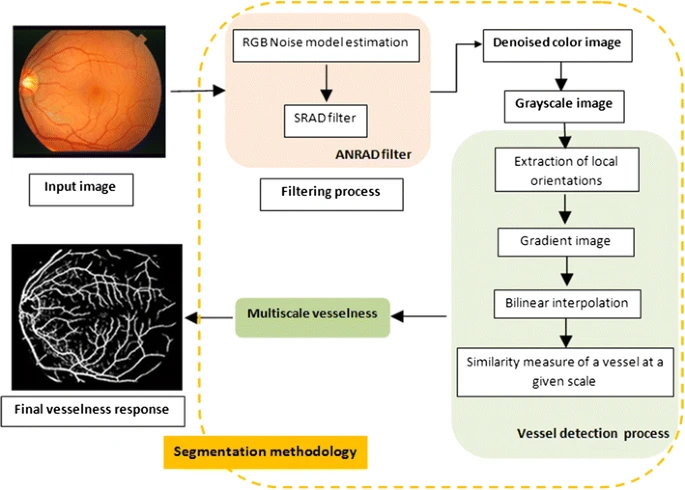
Recently, numerous research works in retinal-structure analysis have been performed to analyze retinal images for diagnosing and preventing ocular diseases such as diabetic retinopathy, which is the first most common causes of vision loss in the world. In this paper, an algorithm for vessel detection in fundus images is employed. First, a denoising process using the noise-estimation-based
Review of fractional-order electrical characterization of supercapacitors
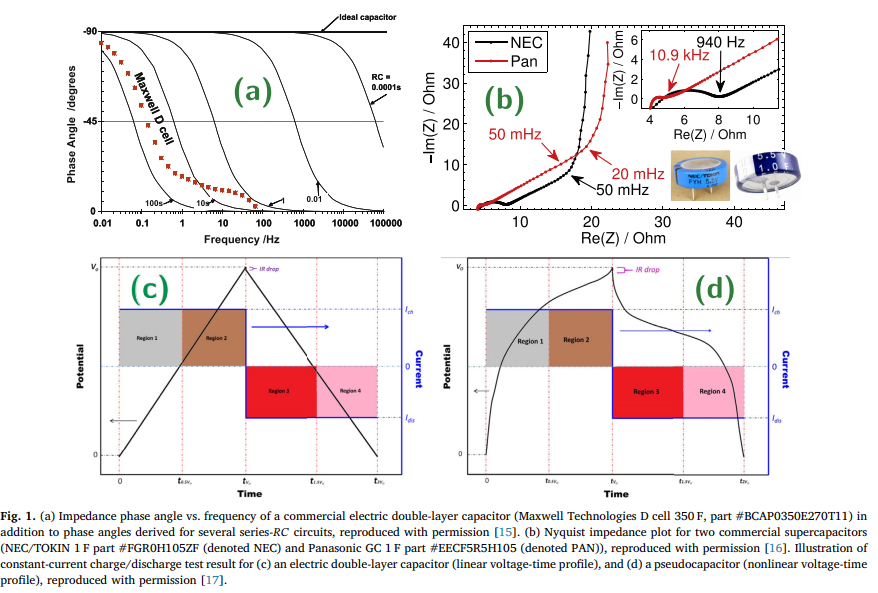
The tests and calculation of the key performance metrics of supercapacitors including capacitance, power and energy stored are commonly reported by the academia and the industry based on formulæ valid only for ideal capacitors. This is inconsistent with the fact that supercapacitors exhibit electrical behaviors that are different from those of ideal capacitors whether they are looked at in the
Design and analysis of 2T2M hybrid CMOS-Memristor based RRAM
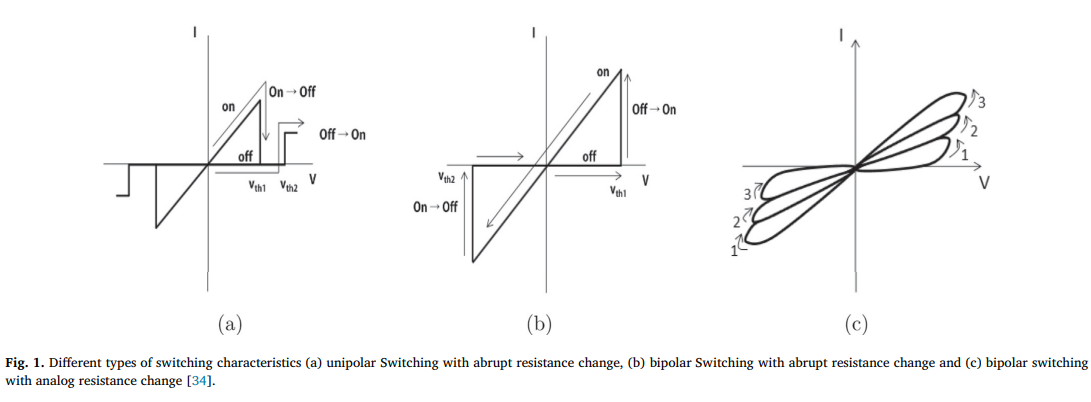
In this paper, a Static Noise Margin (SNM) analysis for 2T2M RRAM cell is investigated. The proposed analysis is done using mathematical formulation and verified by SPICE simulations. The analysis is tested for both, write and read modes. Moreover, the analysis is applied to diverse types of RRAM cells, and a comparison between the performance of such cells is discussed. Additionally, the effect
IoT ethics challenges and legal issues
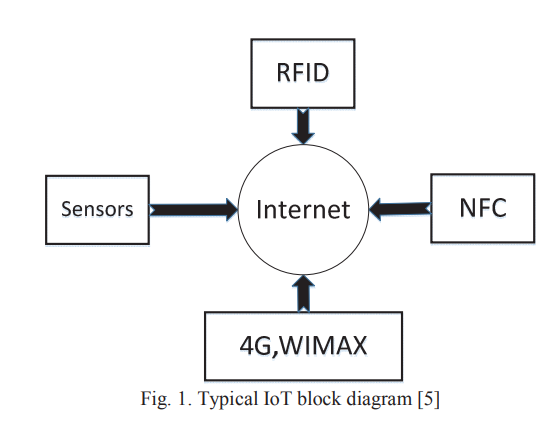
IoT systems have different technologies such as: RIFD, NFC, 3G, 4G, and Sensors. Their function is to transfer very large sensitive and private data. There are many ethical challenges that need to be taken into consideration by individuals and companies that use this technology. Amongst the challenges is the user awareness of attack risks. This paper discusses different ethical and legal

Dynamics of fractional and double-humped logistic maps versus the conventional one
This paper presents the dynamic analysis of two discrete logistic chaotic maps versus the conventional map. The first map is the fractional logistic map with the extra degrees of freedom provided by the added number of variables. It has two more variables over the conventional one. The second map is the double-humped logistic map. It is a fourth-order map which increases the non-linearity over the

Generalized double-humped logistic map-based medical image encryption
This paper presents the design of the generalized Double Humped (DH) logistic map, used for pseudo-random number key generation (PRNG). The generalized parameter added to the map provides more control on the map chaotic range. A new special map with a zooming effect of the bifurcation diagram is obtained by manipulating the generalization parameter value. The dynamic behavior of the generalized
Security and Efficiency of Feistel Networks Versus Discrete Chaos for Lightweight Speech Encryption
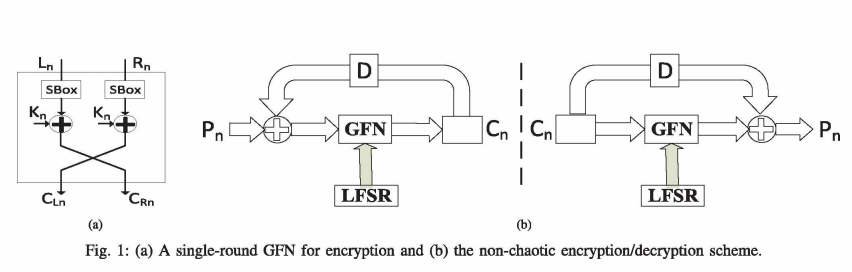
This paper compares examples of non-chaotic and chaotic ciphers from the viewpoint of their suitability for speech encryption, especially in real-time and lightweight cipher systems. The non-chaotic encryption scheme depends on a modified Generalized Feistel Network (GFN), Linear Feedback Shift Register (LFSR) and Substitution Boxes (S-Boxes). The chaotic encryption scheme utilizes a generalized
Self-excited attractors in jerk systems: Overview and numerical investigation of chaos production
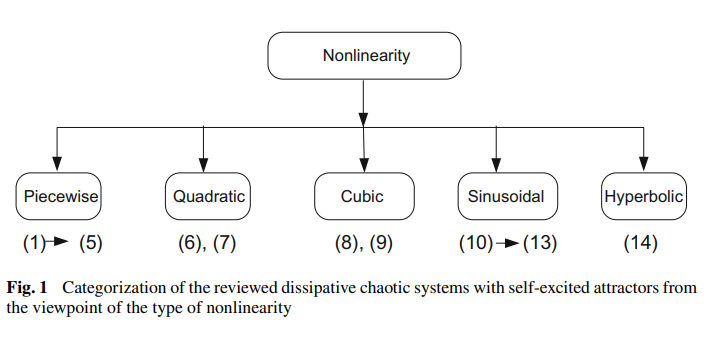
Chaos theory has attracted the interest of the scientific community because of its broad range of applications, such as in secure communications, cryptography or modeling multi-disciplinary phenomena. Continuous flows, which are expressed in terms of ordinary differential equations, can have numerous types of post transient solutions. Reporting when these systems of differential equations exhibit
Chaos and bifurcation in controllable jerk-based self-excited attractors
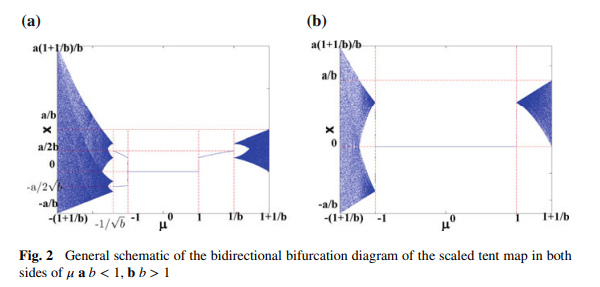
In the recent decades, utilization of chaotic systems has flourished in various engineering applications. Hence, there is an increasing demand on generalized, modified and novel chaotic systems. This chapter combines the general equation of jerk-based chaotic systems with simple scaled discrete chaotic maps. Two continuous chaotic systems based on jerk-equation and discrete maps with scaling