
Filter by
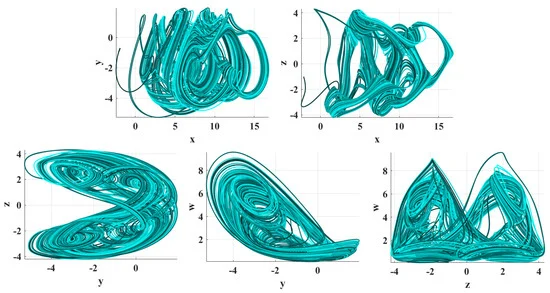
An Encryption Application and FPGA Realization of a Fractional Memristive Chaotic System
The work in this paper extends a memristive chaotic system with transcendental nonlinearities to the fractional-order domain. The extended system’s chaotic properties were validated through bifurcation analysis and spectral entropy. The presented system was employed in the substitution stage of an image encryption algorithm, including a generalized Arnold map for the permutation. The encryption
High Gain Meander Line Antenna for 2.4 GHz Bluetooth Applications
In this paper, a highly directive meander line antenna is proposed to be utilized in the unlicensed Bluetooth band. The main goal of the proposed structure is to achieve low profile, and high gain in the Bluetooth band. Moreover, the antenna should be of low cost to be suitable for commercial use. The proposed structure is simulated using HFSS and CST to verify the obtained results. The maximum

Double Visual Cryptography Using Generalized Tent Map, Rotation, and Image Filtering
This paper introduces a Multi-Visual Cryptography (MVC) system for sharing two color images, where the secrets can be revealed with low computation power using all the shares. The system uses the generalized Tent map as a source of randomness to generate any number of random shares. More specifically, (n-1) random shares are generated, and then, the nth share is calculated from the random shares
Modified Arnold Transform and DNA Manipulation for Chaos-Based RGB Image Encryption
Multimedia applications use image encryption algorithms extensively to safeguard and authenticate digital images. This paper presents an RGB image encryption method, which uses Chaos, DNA, pixel sum, and modified Arnold transform. The suggested algorithm is validated to be robust and resistant to visual, statistical, differential, and brute-force attacks. Additionally, the resulting encrypted
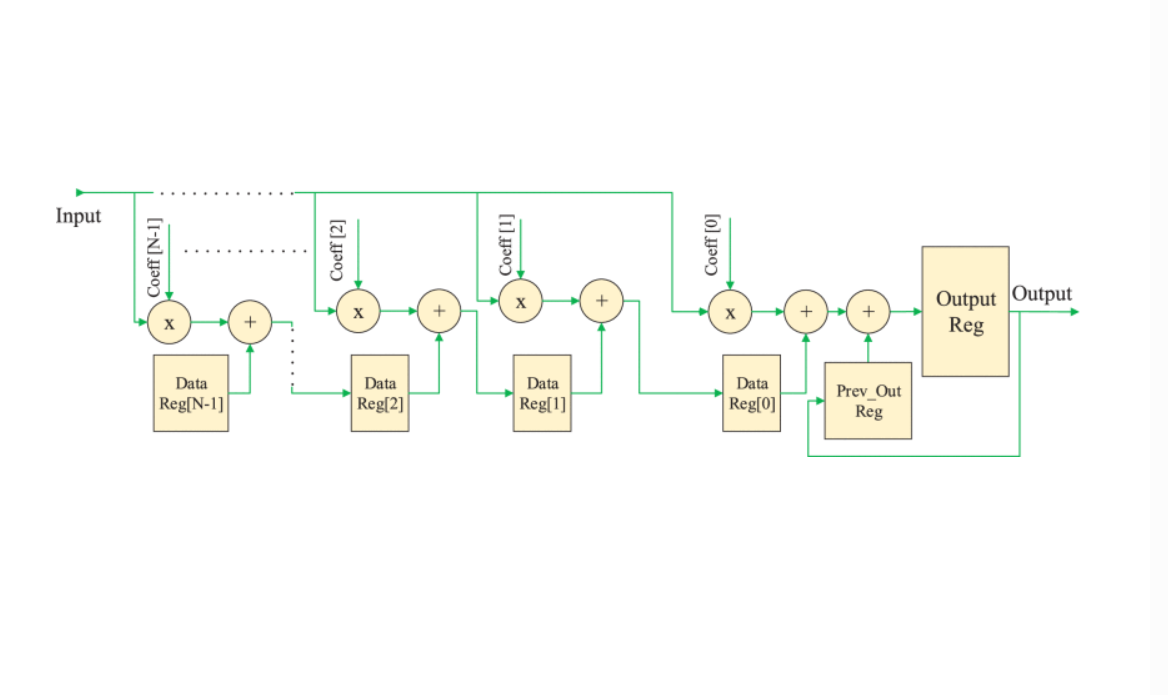
Hardware Accelerator of Fractional-Order Operator Based on Phase Optimized Filters With Applications
Hardware accelerators outperform CPUs in terms of performance by parallelizing the algorithm architecture and using the device’s programmable resources. FPGA is a type of hardware accelerator that excels not only in performance but also in energy efficiency. So, it provides a suitable platform for implementing complicated fractional-order systems. This paper proposes a novel phase-based
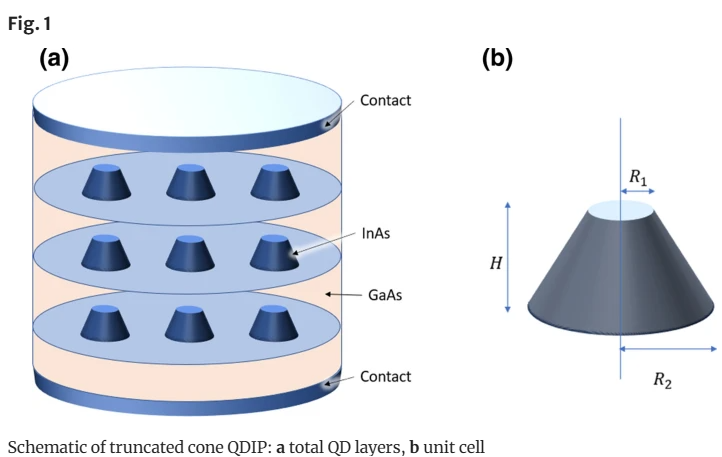
J–V characteristics of dark current in truncated conical quantum dot infrared photodetectors (QDIPs)
Quantum Dot Infrared Photodetector (QDIP) is one of the promising candidates for infrared photodetection due to its controllable heterojunction bandgap and sensitivity to normal incident radiation. It is expected to be superior to infrared photodetectors of mature technologies such as Mercury Cadmium Telluride (HgCdTe) or a quantum well infrared photodetector. In the presented paper, we have
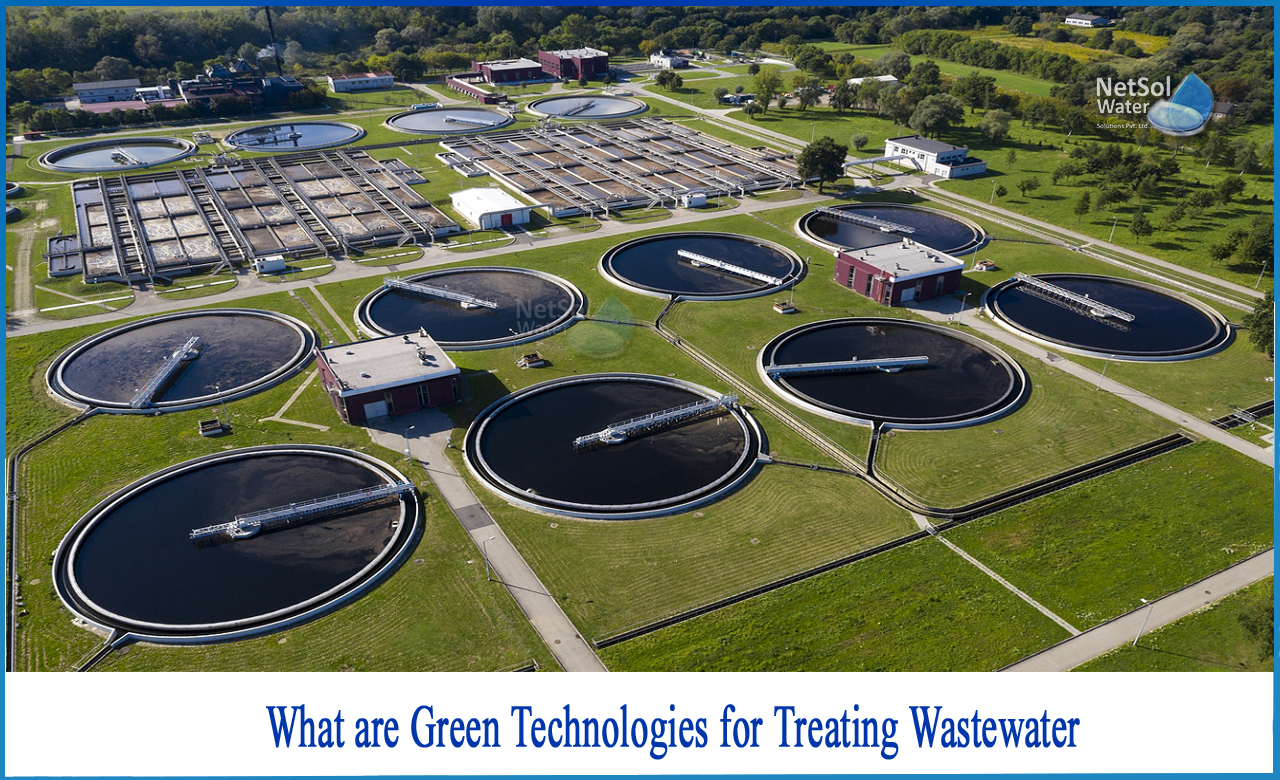
Applied Techniques for Wastewater Treatment

Synthesis of resonance-based common-gate fully differential band-pass filters
We propose a class of fully differential filters based on a common-gate differential amplifier cell in three different topologies. Our focus is on the synthesis of second-order band-pass filters and we found 53 possible circuits. All filters are resonance-based and have electronically tunable gain. Post layout simulations in 65-nm CMOS technology are provided to validate the proper function of
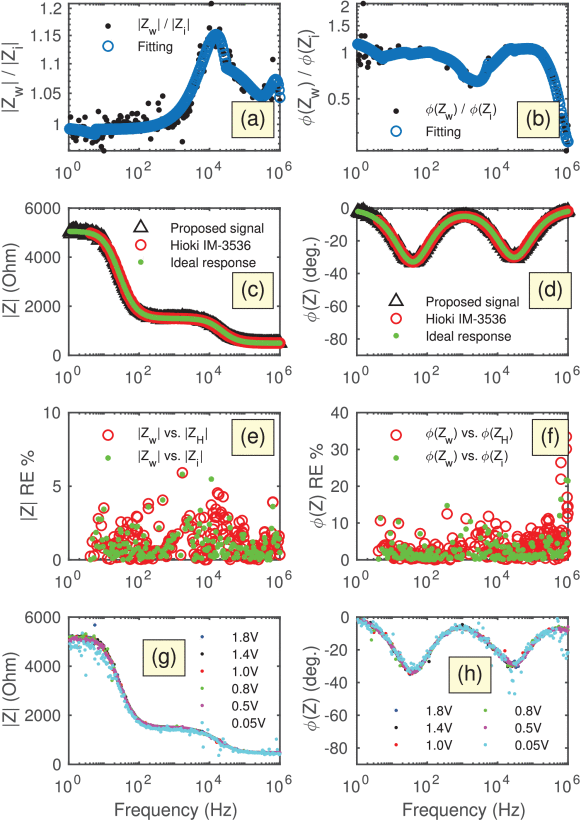
Time-Frequency Design of a Multi-Sine Excitation with Random Phase and Controllable Amplitude for (Bio) Impedance Measurements
Impedance spectroscopy has become a standard electroanalytical technique to study (bio)electrochemical and physiological systems. From an instrumentation point of view, the measurement of impedance can be carried out either in the frequency domain using the classical frequency sweep method or in the time domain using a variety of broadband signals. While time-domain techniques can be implemented

SSHC with One Capacitor for Piezoelectric Energy Harvesting
Piezoelectric vibration energy harvesters have attracted a lot of attention as a way to power self-sustaining electronic systems. Furthermore, as part of the growing Internet of Things (loT) paradigm, the ongoing push for downsizing and higher degrees of integration continues to constitute major drivers for autonomous sensor systems. Two of the most effective interface circuits for piezoelectric