

Fractional-order inverse filters revisited: Equivalence with fractional-order controllers
The equivalence of fractional-order inverse filters with fractional-order controllers is demonstrated in this work. This is achieved by appropriately rewriting the filters transfer functions in order to clarify the correspondence between the gain and time-constant of the filters and the scaling factor and differentiation/integration constant of the controllers. Possible implementations of fractional-order inverse filters using second generation voltage conveyors are presented and an application example, related to the control of a motion system, is demonstrated for evaluating the behavior of
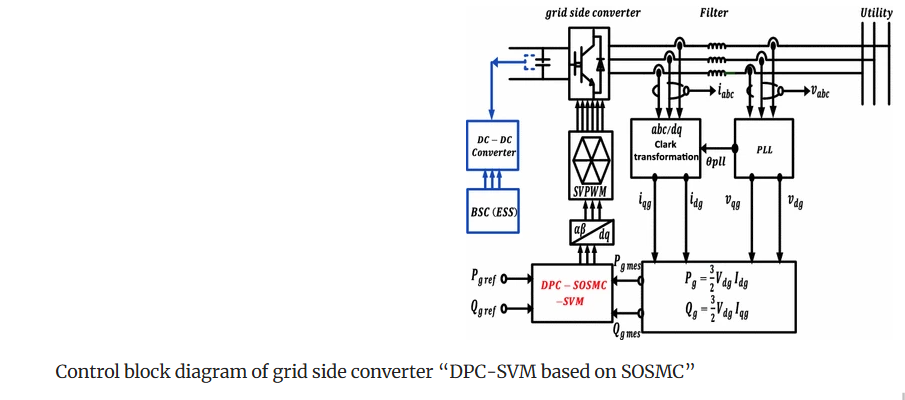
Robust adaptive supervisory fractional order controller for optimal energy management in wind turbine with battery storage
To address the challenges of poor grid stability, intermittency of wind speed, lack of decision-making, and low economic benefits, many countries have set strict grid codes that wind power generators must accomplish. One of the major factors that can increase the efficiency of wind turbines (WTs) is the simultaneous control of the different parts in several operating area. A high performance controller can significantly increase the amount and quality of energy that can be captured from wind. The main problem associated with control design in wind generator is the presence of asymmetric in the
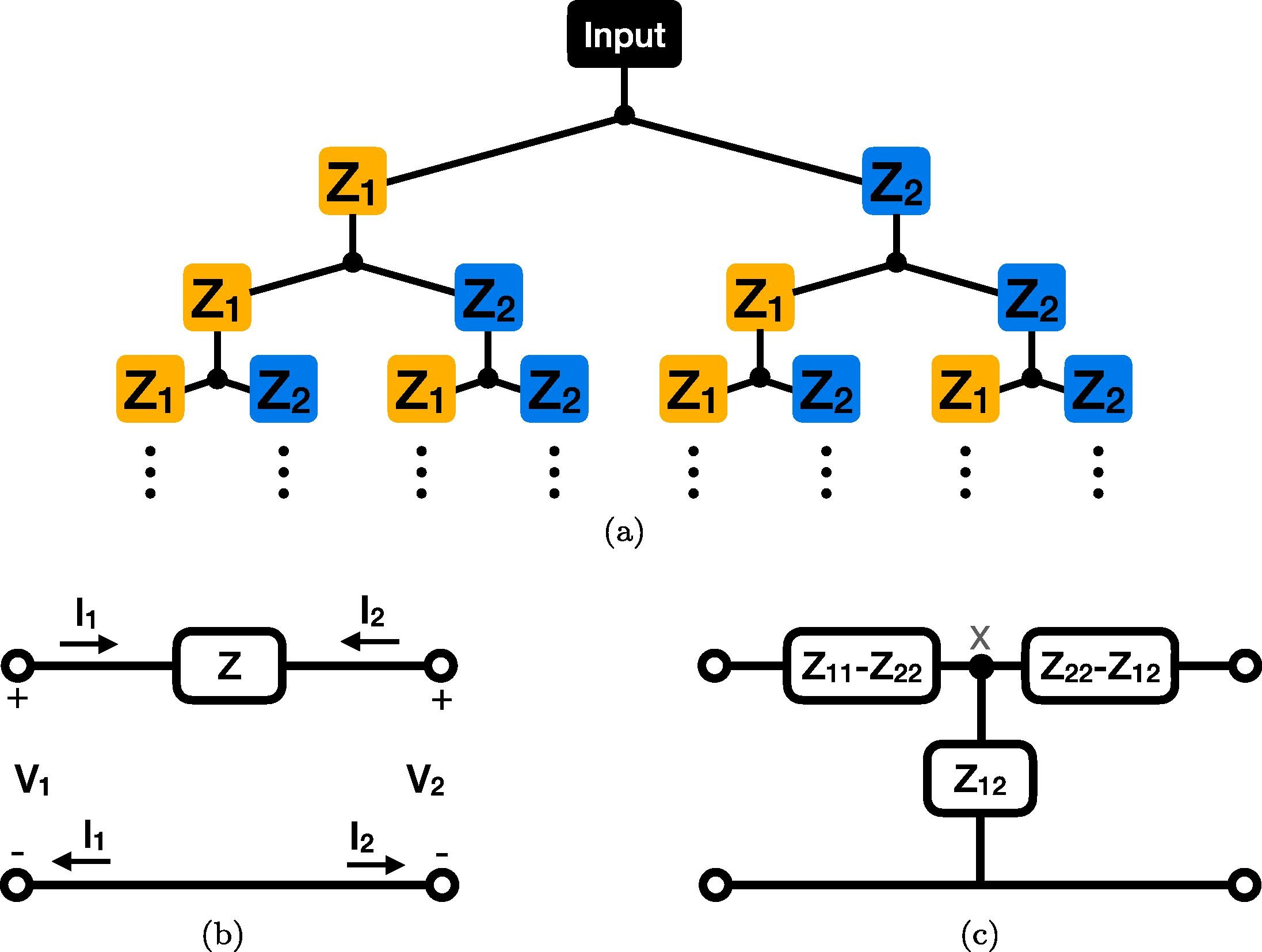
Generalizing the Warburg impedance to a Warburg impedance matrix
We seek to generalize and study the well-known Warburg impedance element, which has an impedance proportional to 1/s (s=jω is the complex frequency), to a two-port impedance network. For this purpose, we consider an infinite binary tree structure inside which each impedance is treated as a two-port network. We obtain a Warburg impedance matrix, which is both symmetrical and reciprocal, and study its equivalent circuit behavior. Interestingly, the equivalent circuit contains two resistors and a Cole–Davidson type impedance proportional to 1+2/(τs), where τ is a time constant. Simulation results
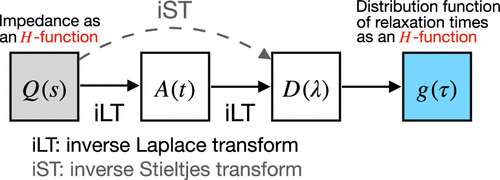
Procedure for Obtaining the Analytical Distribution Function of Relaxation Times for the Analysis of Impedance Spectra Using the Fox H-Function
The interpretation of electrochemical impedance spectroscopy data by fitting them to equivalent circuit models has been a standard method of analysis in electrochemistry. However, the inversion of the data from the frequency domain to a distribution function of relaxation times (DFRT) has gained considerable attention for impedance data analysis as it can reveal more detailed information about the underlying electrochemical processes without requiring a priori knowledge. The primary purpose of this paper is to provide a general and practical procedure for obtaining analytically the DFRT from
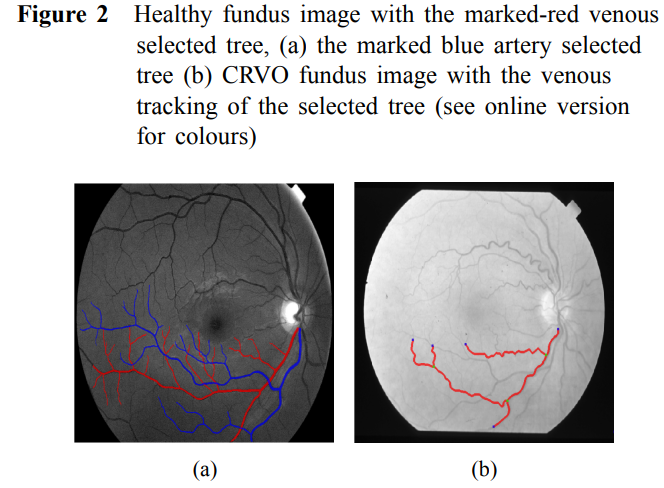
A computational flow model of oxygen transport in the retinal network
The retina's high oxygen demands and the retinal vasculature's relatively sparse nature are assumed to contribute to the retina's specific vulnerability to vascular diseases. This study has been designed to model the oxygen transport in physiologically realistic retinal networks. A computational fluid dynamics study has been conducted to investigate the effect of topological changes on the oxygen partial pressure distribution in retinal blood vessels. The Navier Stokes equations for blood flow and the mass transport equation for oxygen have been coupled and solved simultaneously for the

Biological souring and mitigation strategies in oil reservoirs
Biological souring is one of the major problems facing the oil and gas sector as a result of biogenic sulfide generation in the reservoirs. Sulfidogenic microorganism and particularly sulfate-reducing bacteria are the main generator of the biogenic sulfide. In consequence, souring has a plethora of economic and environmental problems. It has a negative impact on the petroleum industry, where the generated sulfide lowers air quality and causes adverse health problems due to its toxicity and carcinogenicity. Furthermore, it affects the whole industry by reducing the product quality and enhancing
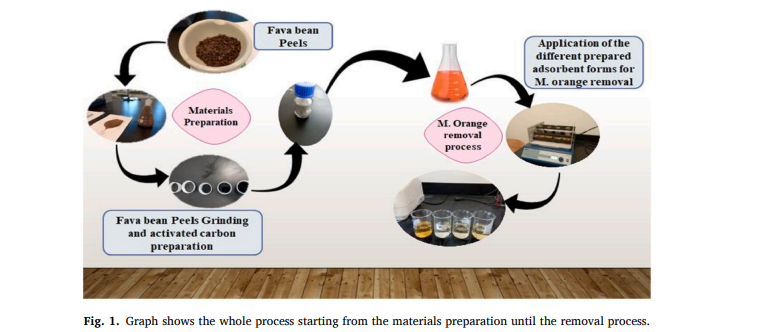
Experimental investigation of methyl-orange removal using eco-friendly cost-effective materials raw fava bean peels and their formulated physical, and chemically activated carbon
The discharge of effluents from dye industries into water streams poses a significant environmental and public health risk. In response, eco-friendly adsorbents derived from agricultural waste, such as Fava Bean Peels (R–FBP), have been investigated as potential materials for the removal of such pollutants. In this study, R–FBP and their corresponding physical and chemically activated carbon (P-RFB-AC and C-FBP-AC) were synthesized using H3PO4 acid and characterized using FT-IR, and SEM analyses. An optimization process was conducted to determine the optimum conditions for achieving high
Physical and electrical characterization of high-performance Cu2ZnSnSe4based thin film solar cells
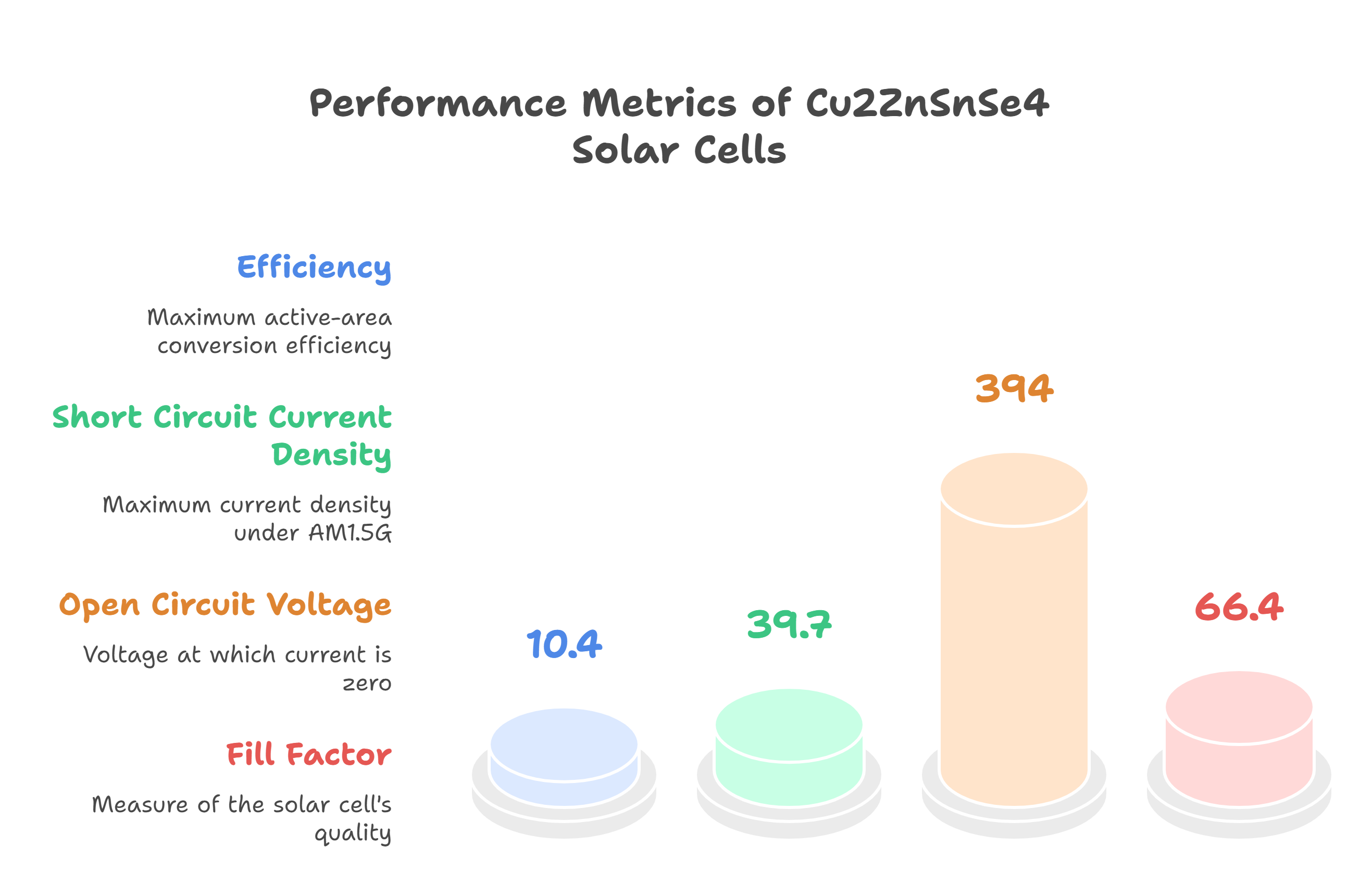
We report on the electrical, optical and physical properties of Cu2ZnSnSe4solar cells using an absorber layer fabricated by selenization of sputtered Cu, Zn and Cu10Sn90multilayers. A maximum active-area conversion efficiency of 10.4% under AM1.5G was measured with a maximum short circuit current density of 39.7 mA/cm2, an open circuit voltage of 394 mV and a fill factor of 66.4%. We perform electrical and optical characterization using photoluminescence spectroscopy, external quantum efficiency, current-voltage and admittance versus temperature measurements in order to derive information
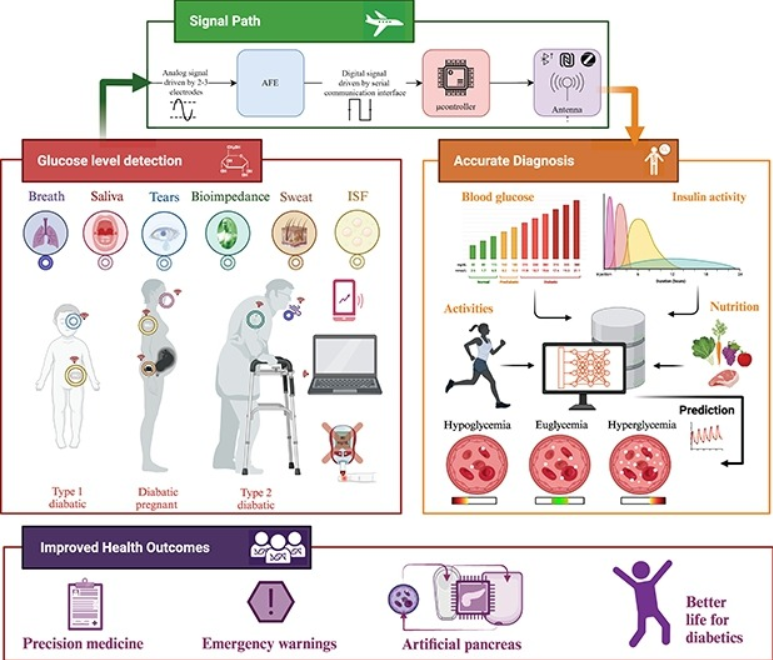
Wearable devices for glucose monitoring: A review of state-of-the-art technologies and emerging trends
Diabetes is a chronic condition that is characterized by high blood glucose levels and can cause damage to multiple organs over time. Continuous monitoring of glucose levels is essential for both diabetic and non-diabetic individuals. There have been major developments in glucose monitoring technology over the past decade, which have been driven by research and industry efforts. Despite these significant advancements, the area of glucose biosensors still faces significant challenges. This paper presents a comprehensive summary of the latest glucose monitoring technologies, including invasive
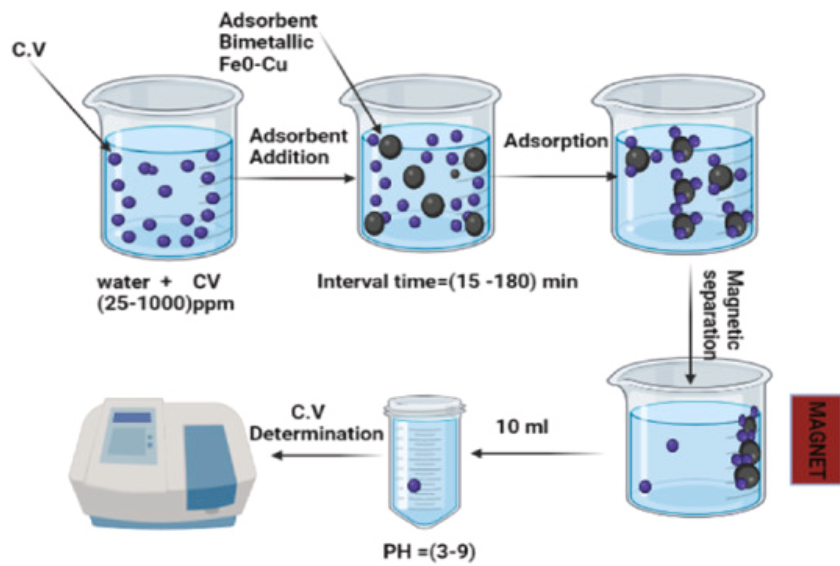
Crystal violet removal using bimetallic Fe0–Cu and its composites with fava bean activated carbon
Nano zero-valent iron (nZVI), bimetallic nano zero-valent iron-copper (Fe0– Cu), and fava bean activated carbon-supported bimetallic nano zero-valent iron-copper (AC-Fe0-Cu) are synthesized and characterized using DLS, zeta potential, FT-IR, XRD, and SEM. The maximum removal capacity is demonstrated by bimetallic Fe0–Cu, which is estimated at 413.98 mg/g capacity at pH 7, 180 min of contact duration, 120 rpm shaking speed, ambient temperature, 100 ppm of C.V. dye solution, and 1 g/l dosage. The elimination capability of the H2SO4 chemical AC-Fe0-Cu adsorbent is 415.32 mg/g under the same