
A Secured Lossless Visual Secret Sharing for Color Images Using Arnold Transform
Nowadays, with the rapid growth in information, a fast and secure method is eagerly needed to share images. (n, n)-Visual Secret Sharing (VSS) is used to share a secret image into n shares, where the secret can only be recovered using all the n shares and the recovery must be fast with low computational complexity. This paper proposes a secured lossless (n, n)-VSS system based on Arnold transform and pixel vectorization suitable to be used with binary, grayscale and color images. Multiple security tests were performed such as entropy, correlation, Mean Squared Error (MSE), National Institute
Modeling woody plant tissue using different fractional-order circuits
This chapter presents results on the most suitable bio-impedance circuits for modeling woody plants. The modified double-shell, the modified triple Cole-Cole, and the traditional wood circuit models are compared for fitting experimentally measured data. Consequently, a modified circuit model is proposed. This model gives the best results for all interelectrode spacing distances when compared to the other circuits. All impedance data have been measured using the research-grade SP150 electrochemical station in the frequency range 0.1 Hz to 200 kHz. The fitting is done using the Zfit of the
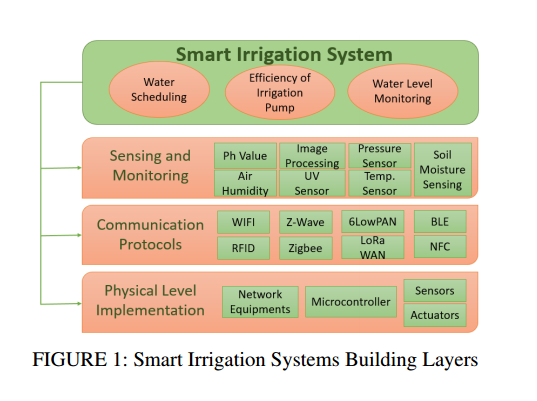
Smart Irrigation Systems: Overview
Countries are collaborating to make agriculture more efficient by combining new technologies to improve its procedure. Improving irrigation efficiency in agriculture is thus critical for the survival of sustainable agricultural production. Smart irrigation methods can enhance irrigation efficiency, specially with the introduction of wireless communication systems, monitoring devices, and enhanced control techniques for efficient irrigation scheduling. The study compared on a wide range of study subjects to investigate scientific approaches for smart irrigation. As a result, this project
Fractional Order Systems: An Overview of Mathematics, Design, and Applications for Engineers: Volume 1 in Emerging Methodologies and Applications in Modelling
Fractional Order Systems: An Overview of Mathematics, Design, and Applications for Engineers introduces applications from a design perspective, helping readers plan and design their own applications. The book includes the different techniques employed to design fractional-order systems/devices comprehensively and straightforwardly. Furthermore, mathematics is available in the literature on how to solve fractional-order calculus for system applications. This book introduces the mathematics that has been employed explicitly for fractional-order systems. It will prove an excellent material for
A survey on memristor active emulation circuits in the fractional-order domain
Chua postulated a new element called a memristor, contributing flux and charge link. The main characteristic of the memristor is a pinched hysteresis double loop with one pinched point. The memristor’s realization in the fractional-order domain increases the hysteresis loop area’s controllability and frequency range. Besides, the fractional-higher-order memristor is realized, achieving more than a pinched point with changes of the pinched point’s location at different values of a. The commercial memristor device is absent until now. For this purpose, scientists concentrated on modeling the
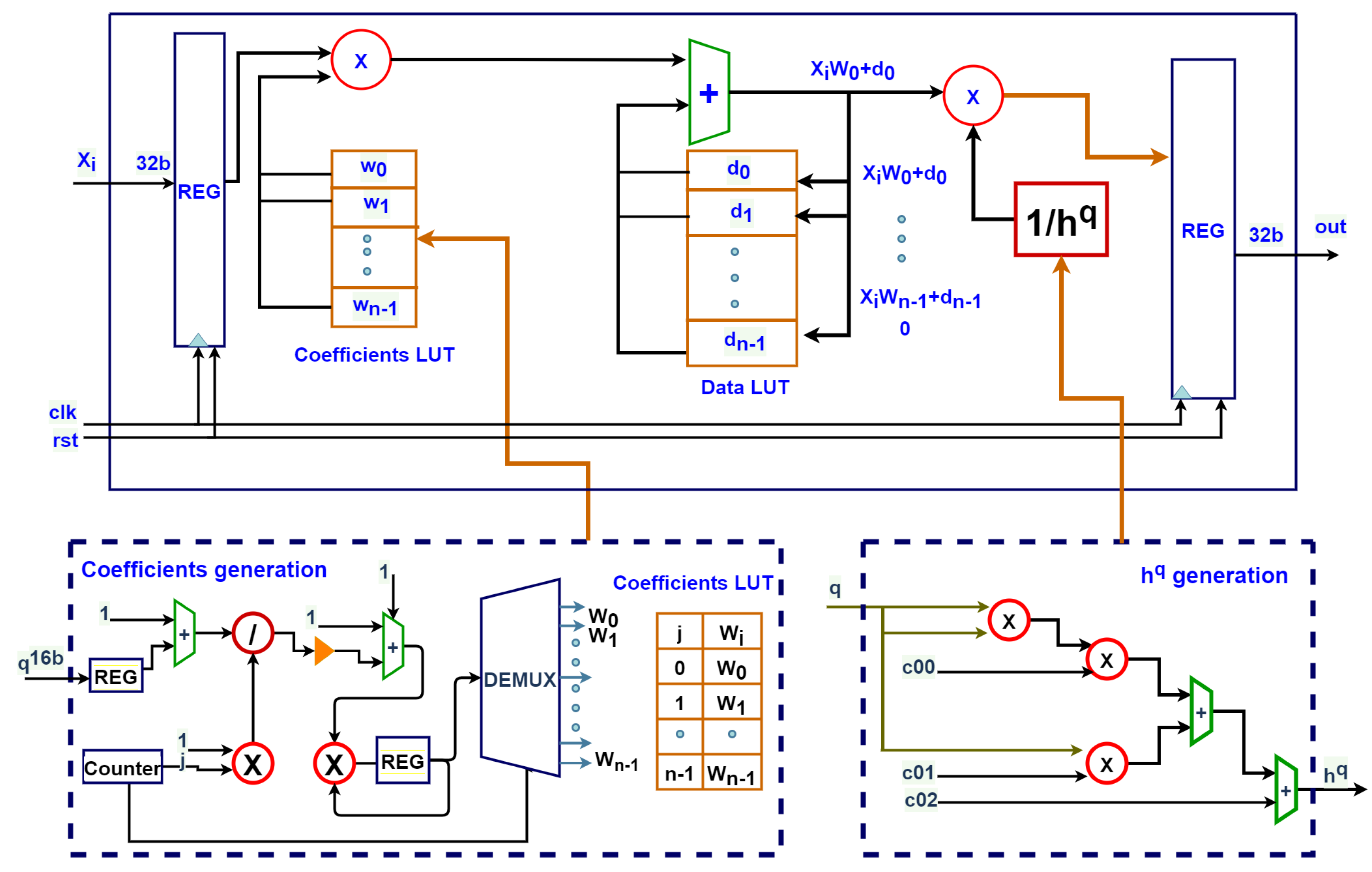
A Unified FPGA Realization for Fractional-Order Integrator and Differentiator
This paper proposes a generic FPGA realization of an IP core for fractional-order integration and differentiation based on the Grünwald–Letnikov approximation. All fractional-order dependent terms are approximated to simpler relations using curve fitting to enable an efficient hardware realization. Compared to previous works, the proposed design introduces enhancements in the fractional-order range covering both integration and differentiation. An error analysis between software and hardware results is presented for sine, triangle and sawtooth signals. The proposed generic design is realized
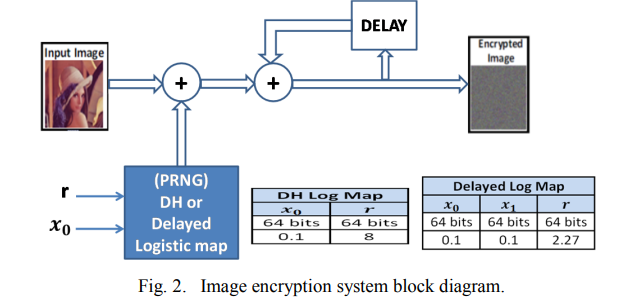
Image encryption based on double-humped and delayed logistic maps for biomedical applications
This paper presents a secured highly sensitive image encryption system suitable for biomedical applications. The pseudo random number generator of the presented system is based on two discrete logistic maps. The employed maps are: the one dimensional double humped logistic map as well as the two-dimensional delayed logistic map. Different analyses are introduced to measure the performance of the proposed encryption system such as: histogram analysis, correlation coefficients, MAE, NPCR as well as UACI measurements. The encryption system is proven to be highly sensitive to ±0.001% perturbation
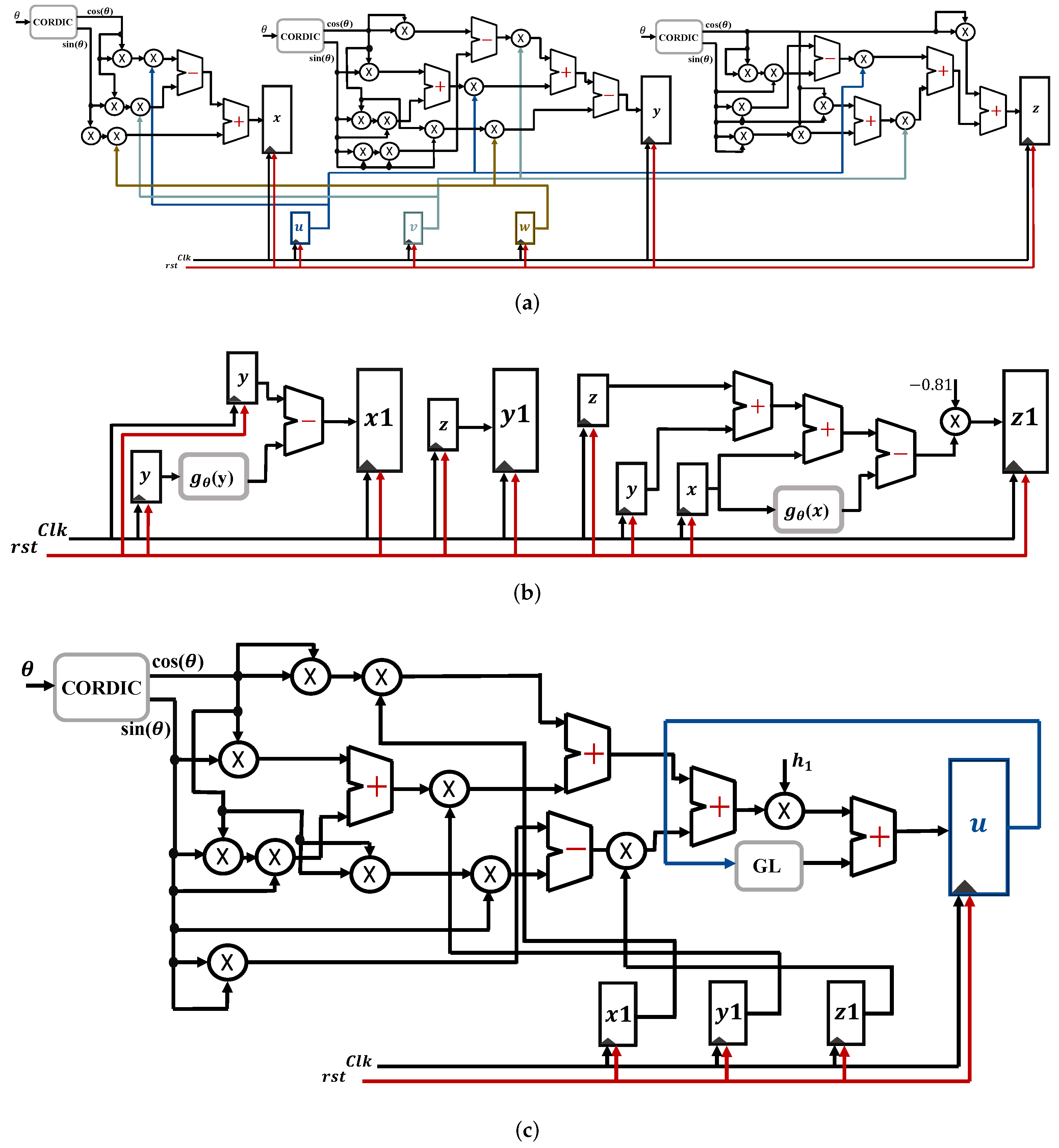
CORDIC-Based FPGA Realization of a Spatially Rotating Translational Fractional-Order Multi-Scroll Grid Chaotic System
This paper proposes an algorithm and hardware realization of generalized chaotic systems using fractional calculus and rotation algorithms. Enhanced chaotic properties, flexibility, and controllability are achieved using fractional orders, a multi-scroll grid, a dynamic rotation angle(s) in two- and three-dimensional space, and translational parameters. The rotated system is successfully utilized as a Pseudo-Random Number Generator (PRNG) in an image encryption scheme. It preserves the chaotic dynamics and exhibits continuous chaotic behavior for all values of the rotation angle. The
On Fractional-order Capacitive Wireless Power Transfer System
Wireless power transfer is becoming an increasingly viable solution for the electrical powering of various electronic gadgets. However, precise outputs are not guaranteed with integer systems, so fractional-order capacitors are vital. This paper studies a four-plate fractional capacitive power transfer system by varying six orders of capacitors between the plates along with the load resistance. A mathematical model based on a 4× 4 mutual fractional capacitance matrix is established for equidistantly placed four identical metal plates. Moreover, the chosen circuit topology is identified and
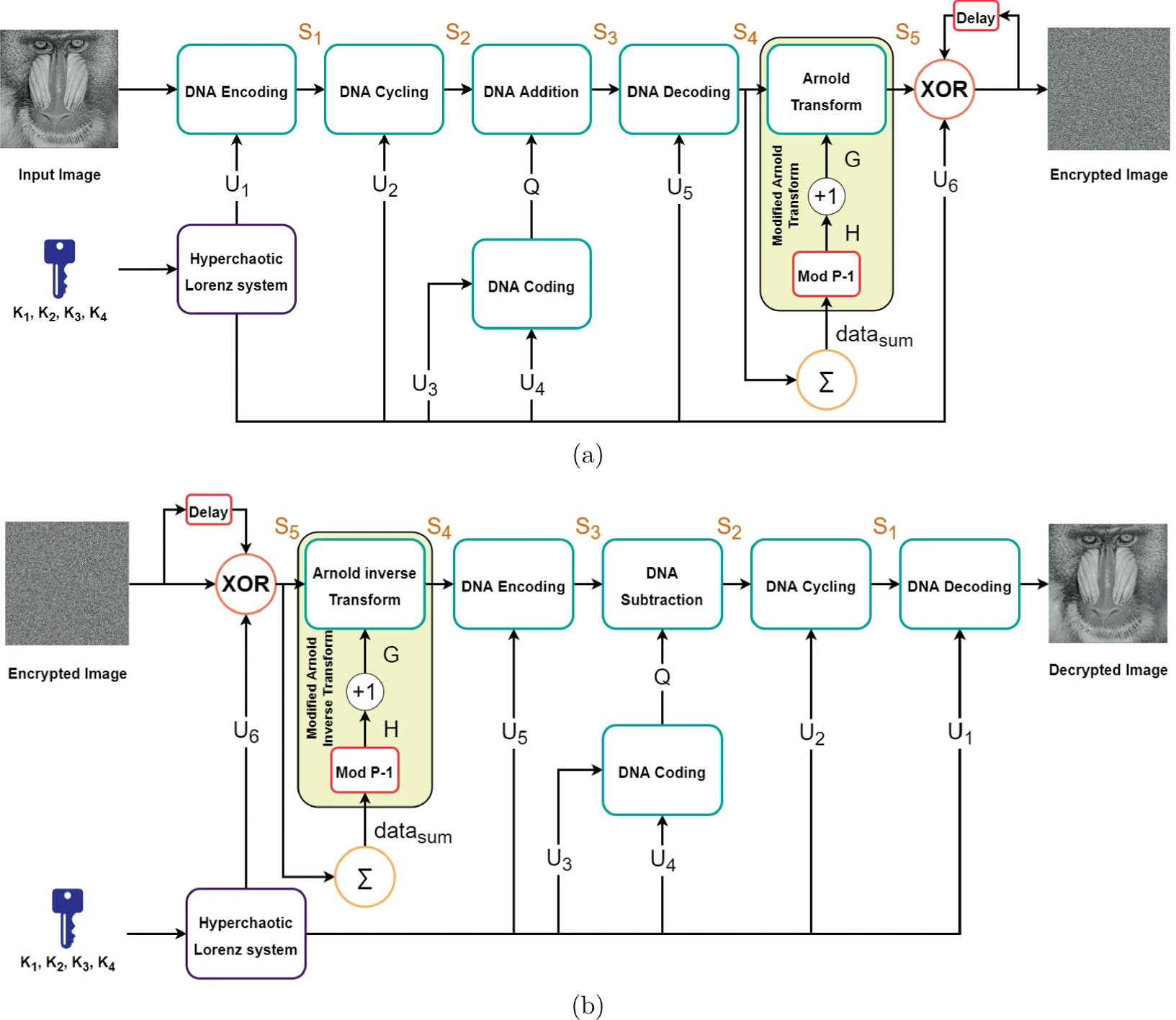
Chaos-Based Image Encryption Using DNA Manipulation and a Modified Arnold Transform
Digital images, which we store and communicate everyday, may contain confidential information that must not be exposed to others. Numerous researches are interested in encryption, which protects the images from ending up in the hands of unauthorized third parties. This paper proposes an image encryption scheme using chaotic systems, DNA manipulation, and a modified Arnold transform. Both DNA manipulation and hyperchaotic Lorenz system are utilized in the substitution of the images’ pixel values. An additional role of hyperchaotic Lorenz system is that it generates the random numbers required