
Current source based standard-cell model for accurate timing analysis of combinational logic cells
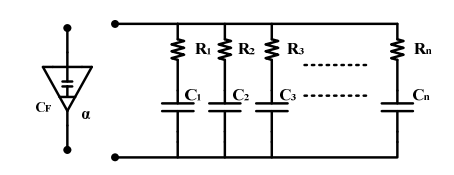
Timing verification is an essential process in nanometer design. Therefore, static timing analysis (STA) is currently the main aspect of performance verification. Traditional STA is based on lookup tables with input slew and output load capacitance. It is becoming insufficient to accurately characterize many significant aspects of the conventional cell delays models, such as: the process variations, nonlinear waveforms, nonlinear loads, and multiple inputs switching (MIS). Therefore, the current trend in modern designs is to use current source based models (CSM), which model MOSFETs as a
A novel high throughput high resolution two-stage oscillator-based TDC
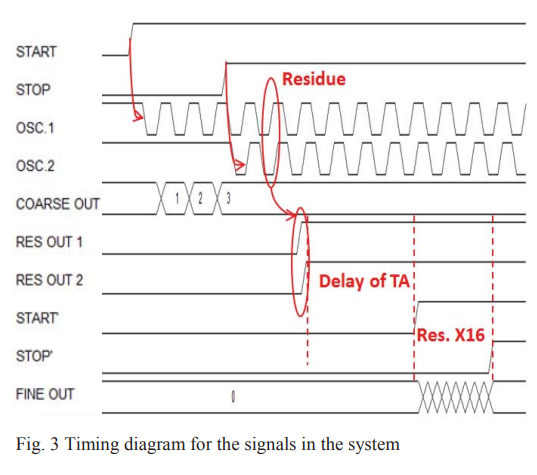
This paper presents a new technique to reduce the conversion time, hence improve the throughput, of the two-stage Time to Digital Converter (TDC) architecture. An oscillator based TDC is used in the first and second stages. The time residue from the first stage is generated directly after the stop signal is asserted and saved in the form of phase-shift between two oscillating signals. A throughput of 400 MS/s, a DNL of 0.38, and an INL of 0.36 are achieved. © 2013 IEEE.
The modified single input Op-Amps memristor based oscillator
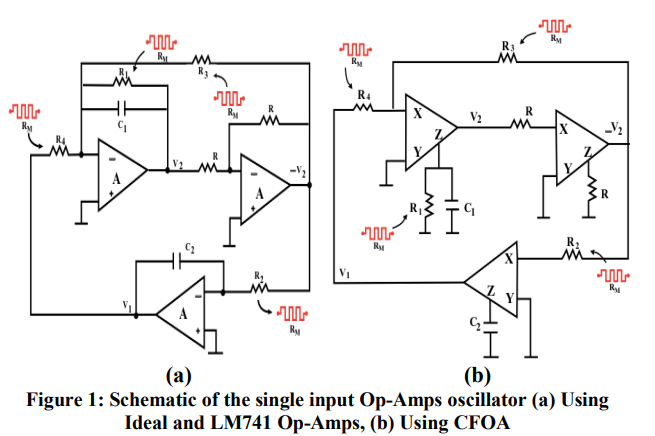
This paper introduces the modified single input Op-Amps memristor based oscillator. The oscillator is realized with ideal, LM741 and current feedback (AD844) Op-Amps where memristors replace resistors. The effect of memristor on the oscillation frequency and the oscillation condition that are totally independent is studied. This helped in studying the whole operation regime of the memristor. The effect of initial conditions on the circuit behavior is discussed. The dynamic poles of the oscillator after resistors replacement are illustrated. Sustained oscillation is obtained and simulated
Generalized hardware post-processing technique for chaos-based pseudorandom number generators
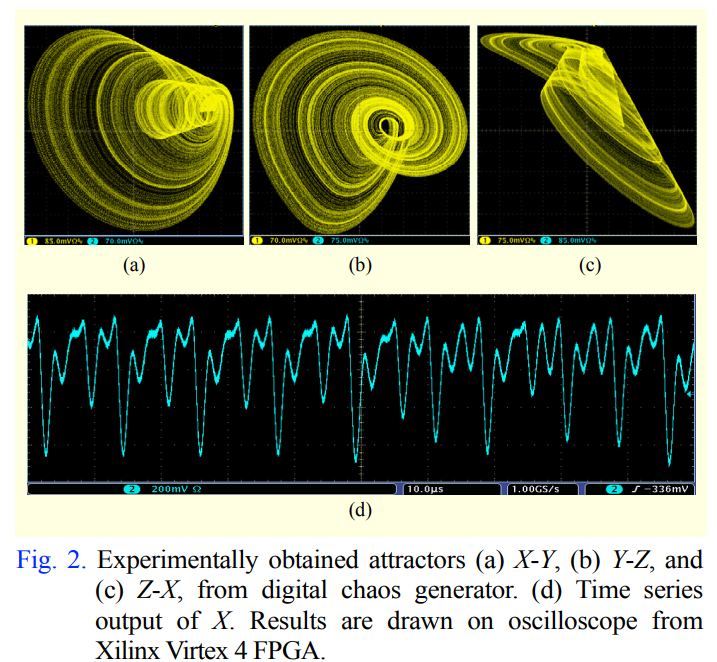
This paper presents a generalized post-processing technique for enhancing the pseudorandomness of digital chaotic oscillators through a nonlinear XOR-based operation with rotation and feedback. The technique allows full utilization of the chaotic output as pseudorandom number generators and improves throughput without a significant area penalty. Digital design of a third-order chaotic system with maximum function nonlinearity is presented with verified chaotic dynamics. The proposed post-processing technique eliminates statistical degradation in all output bits, thus maximizing throughput
A 2.5 μwatts two stage wake-up receiver for Wireless Sensor Networks
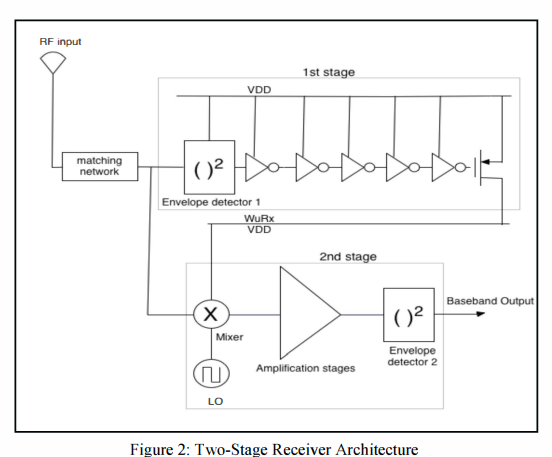
An ultra low power wake-up receiver for Wireless Sensor Network (WSN) applications is presented. The proposed wake-up receiver is composed of two stages. The first stage is a low-power low-sensitivity stage that acts as a 'sentinel' and continuously monitors the channel, while the second stage is a conventional low-power wake-up receiver. The 2.44GHz two-stage receiver has a sensitivity of -72dBm when the transmitted signal power is 0dBm. The power consumed during sleep mode is 2.5μWatts and 41μWatts in the wake-up receiver active mode with a 0.5V supply voltage. The power consumption is
On the mathematical modeling of memcapacitor bridge synapses
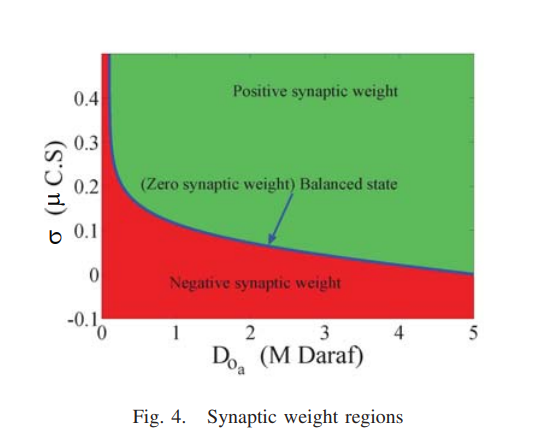
Mem-element based synaptic bridge is very promising topic due to its learning capability where the synaptic bridge can be build using either memristors or memcapacitors. In this paper, the detailed mathematical analysis of memcapacitor bridge circuit is introduced. This mathematical analysis is build when a current input signal is applied to excite the bridge. Closed form expressions for the required pulse width; synaptic weight; and conditions for positive, negative and zero synaptic weight are derived. The obtained expressions are verified using SPICE simulations showing very good matching.
Spectral current-voltage analysis of kesterite solar cells
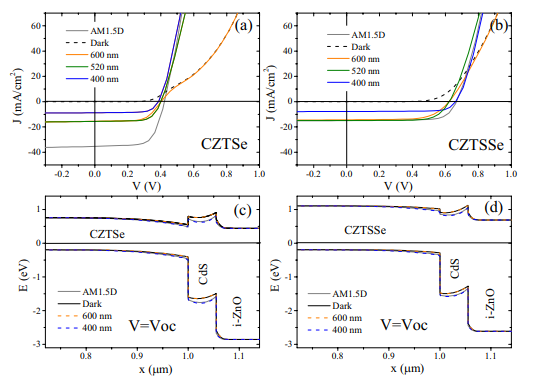
Current-voltage analysis using different optical band pass filters has been performed on Cu2ZnSnSe4 and Cu2ZnSn(S,Se) 4 thin-film solar cells. When using red or orange light (i.e. wavelengths above 600 nm), a distortion appears in the I-V curve of the Cu 2ZnSnSe4 solar cell, indicating an additional potential barrier to the current flow in the device for these conditions of illumination. This barrier is reduced when using a Cu2ZnSn(S,Se)4 absorber. Numerical simulations demonstrate that the barrier visible under red light could be explained by a positive conduction band offset at the front
Memristor-less current- and voltage-controlled meminductor emulators
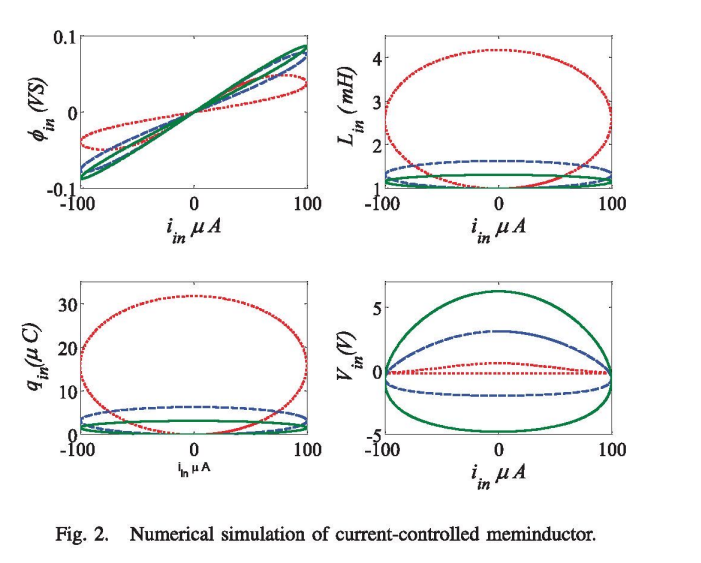
This paper introduces two mathematical models of meminductor based on a simple symmetrical double-loop equation with their generic formulas and analysis. Moreover, new circuits based on CCII are developed for emulating the behavior of the current-controlled and voltage-controlled models. The proposed circuits are realized without using a memristor unlike the previous emulators. Finally, the proposed emulators are verified using PSPICE simulations. © 2014 IEEE.
Low-voltage commercial super-capacitor response to periodic linear-with-time current excitation: A case study
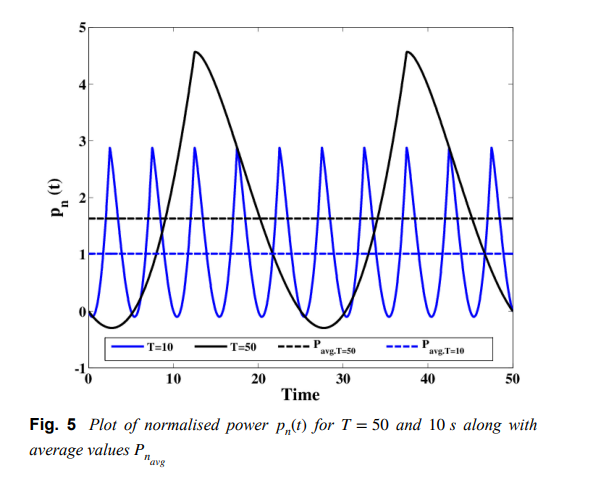
The response of a commercial super-capacitor to an applied periodic current excitation in the form of a triangular waveform is investigated in this study. This waveform has a linear-with-time variation which enables linear charging and discharging of the device. A model consisting of a linear resistance Rs and a constant phase element is used to describe the super-capacitor impedance and expressions for the voltage across the device, the power, and stored energy are derived using concepts from fractional calculus. Experimental results are shown and an application of the study to super
Generalized dynamic switched synchronization between combinations of fractional-order chaotic systems
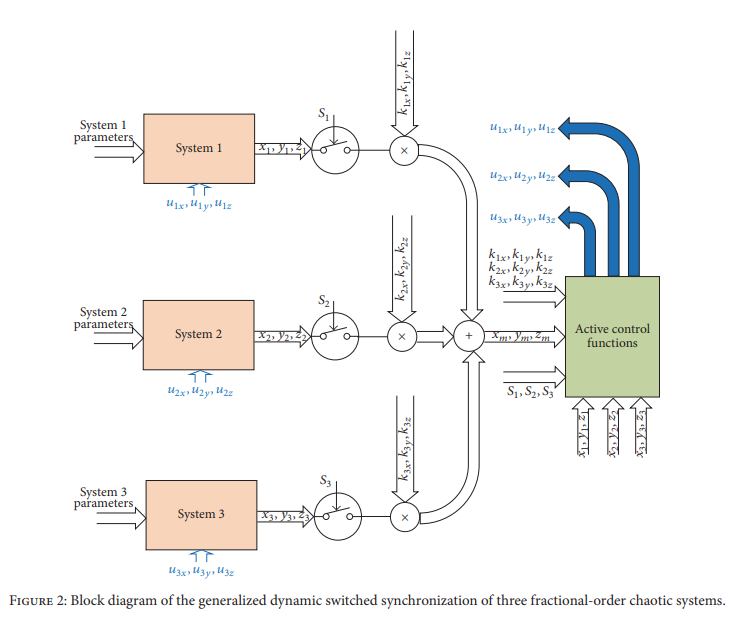
This paper proposes a novel generalized switched synchronization scheme among n fractional-order chaotic systems with various operatingmodes. Digital dynamic switches and dynamic scaling factors are employed, which offermany new capabilities. Dynamic switches determine the role of each system as a master or a slave. A system can either have a fixed role throughout the simulation time (static switching) or switch its role one or more times (dynamic switching). Dynamic scaling factors are used for each state variable of the master system. Such scaling factors control whether the master is a