
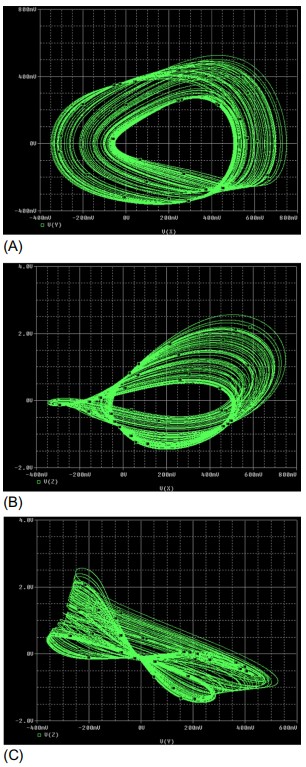
Dynamics, Circuit Design, Synchronization, and Fractional-Order Form of a No-Equilibrium Chaotic System
Systems without equilibrium such as electromechanical models with rotation and electrical circuits with cylindrical phase space were studied a long time ago. However, chaotic systems without equilibrium have received significant attention recently after the introduction of hidden attractors. Interestingly, an attractor of a no-equilibrium system is hidden because its basin of attraction does not intersect with any neighborhood of an unstable fixed point. This chapter presents a 3D no-equilibrium system with hidden chaotic attractors. The fundamental qualitative properties of the proposed no
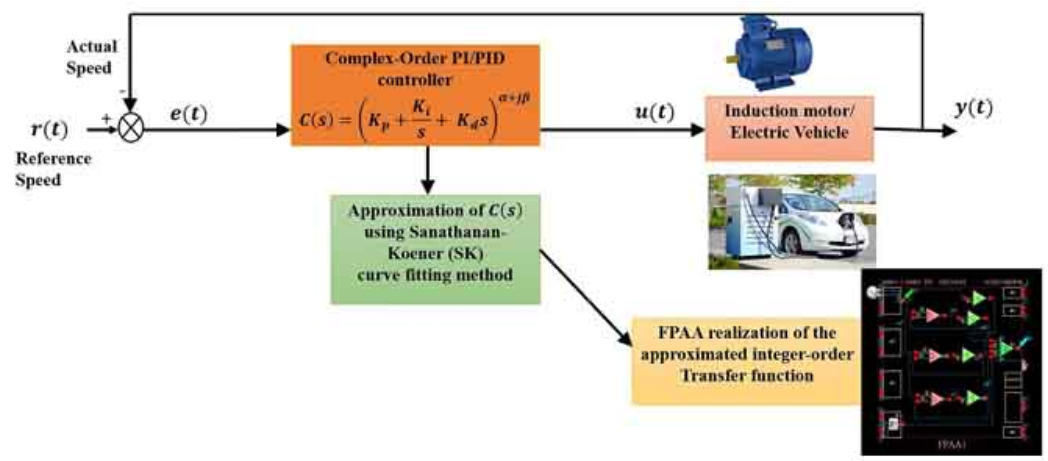
Design of Complex-Order PI/PID Speed Controllers and its FPAA Realization
Complex-order controllers are a generalized version of conventional integer-order controllers and are known to offer greater flexibility, better robustness, and improved system performance. This paper discusses the design of complex-order PI/PID controllers to control the speed of an induction motor drive and an electric vehicle. The speed-tracking performance of the complex-order controllers is compared with fractional-order controllers and conventional integer-order controllers. Implementing complex-order controllers is challenging due to commercial complex-order fractance element
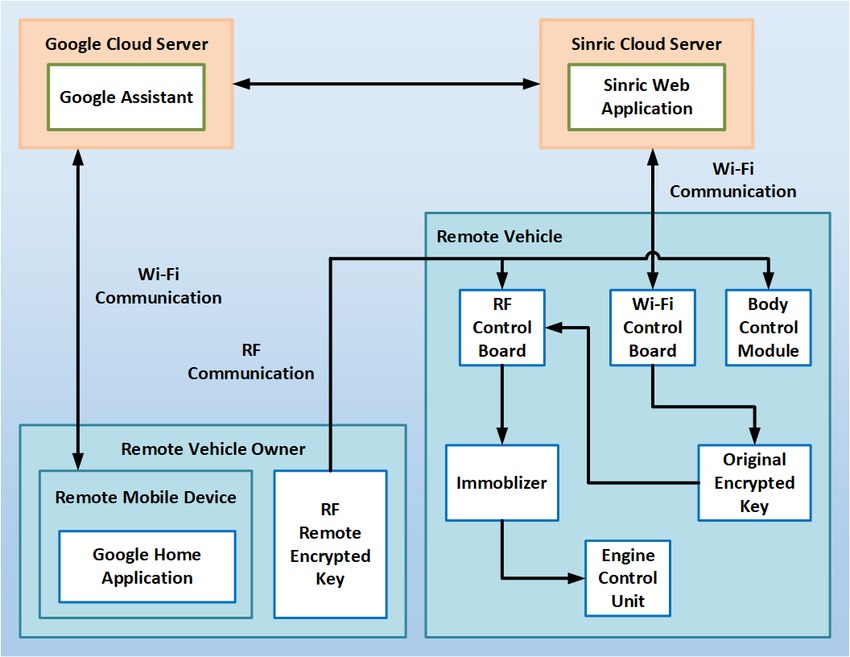
A Reliable Secure Architecture for Remote Wireless Controlling of Vehicle's Internal Systems based on Internet of Vehicles using RF and Wi-Fi
Internet of Vehicles is considered one of the most unprecedented outputs of the Internet of Things. No one has realized or even expected the rapidly-growing revolution regarding autonomous connected vehicles. Nowadays, Internet of Vehicles is massively progressing from Vehicular Ad-Hoc Networks as a huge futuristic research and development discipline. This paper proposes a novel reliable and secure architecture for ubiquitously controlling remote connected cars' internal systems, such as engine, doors' locks, sunroof, horn, windows' and lights' control systems. The main contribution is that
Elementary Negative Group Delay Filter Functions
A theoretical study of the behavior of some elementary first- and second-order functions, which are suitable for realizing negative group delay, is performed in this work. As both the gain and phase responses are simultaneously considered, important derivations related to the actual bandwidth of operation are derived accompanied by useful design tips. The presented theory is supported by simulation and experimental results obtained through the utilization of typical active-RC filter structures, as well as from a field-programmable analog array device. © The Author(s) 2024.
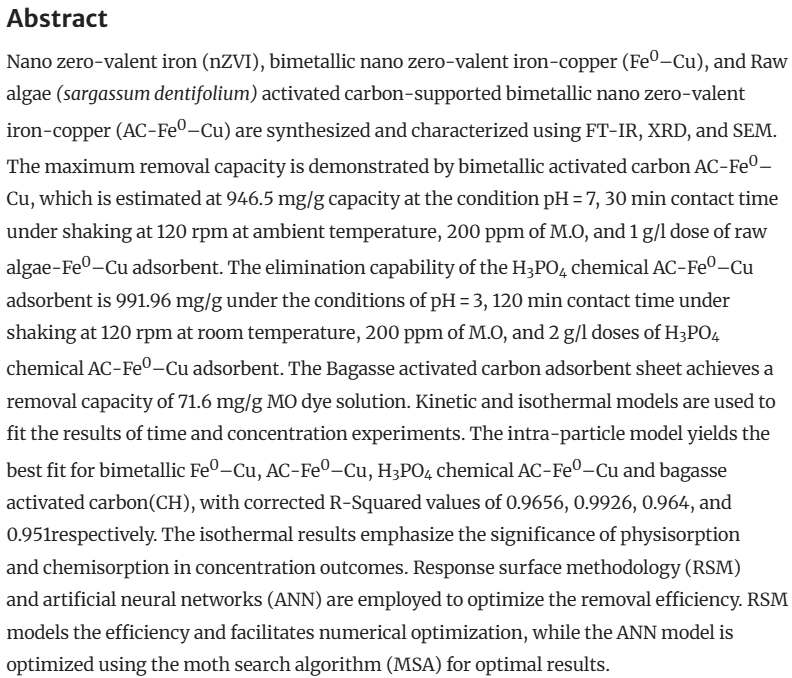
Bio-inspired adsorption sheets from waste material for anionic methyl orange dye removal
Abstract: Nano zero-valent iron (nZVI), bimetallic nano zero-valent iron-copper (Fe0–Cu), and Raw algae (sargassum dentifolium) activated carbon-supported bimetallic nano zero-valent iron-copper (AC-Fe0–Cu) are synthesized and characterized using FT-IR, XRD, and SEM. The maximum removal capacity is demonstrated by bimetallic activated carbon AC-Fe0–Cu, which is estimated at 946.5 mg/g capacity at the condition pH = 7, 30 min contact time under shaking at 120 rpm at ambient temperature, 200 ppm of M.O, and 1 g/l dose of raw algae-Fe0–Cu adsorbent. The elimination capability of the H3PO4
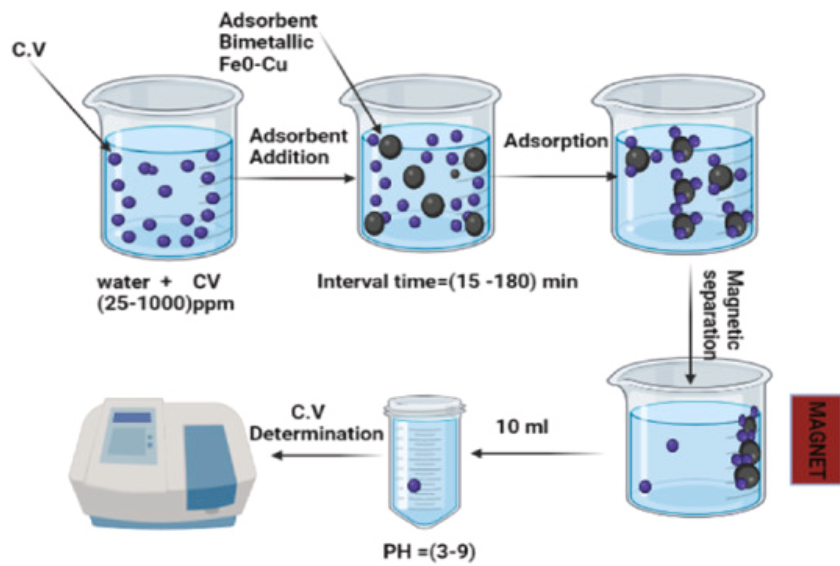
Crystal violet removal using bimetallic Fe0–Cu and its composites with fava bean activated carbon
Nano zero-valent iron (nZVI), bimetallic nano zero-valent iron-copper (Fe0– Cu), and fava bean activated carbon-supported bimetallic nano zero-valent iron-copper (AC-Fe0-Cu) are synthesized and characterized using DLS, zeta potential, FT-IR, XRD, and SEM. The maximum removal capacity is demonstrated by bimetallic Fe0–Cu, which is estimated at 413.98 mg/g capacity at pH 7, 180 min of contact duration, 120 rpm shaking speed, ambient temperature, 100 ppm of C.V. dye solution, and 1 g/l dosage. The elimination capability of the H2SO4 chemical AC-Fe0-Cu adsorbent is 415.32 mg/g under the same

CNTFET-based ternary address decoder design
With the end of Moore's law, new paradigms are investigated for more scalable computing systems. One of the promising directions is to examine the data representation toward higher data density per hardware element. Multiple valued logic (MVL) emerged as a promising system due to its advantages over binary data representation. MVL offers higher information processing within the same number of digits when compared with binary systems. Accessing memory is considered one of the most power- and time-consuming instructions within a microprocessor. In the quest for building an entire ternary
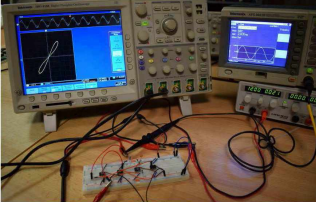
Incremental Grounded Voltage Controlled Memristor Emulator
Memristor has become an interesting research subject in the recent years. Its special behavior has attracted the attention of the research community that motivated researchers to investigate it in details. As memristor is a relatively new electrical element, it is not yet available in the market as a solid state component Researchers found their way to build memristor emulators to achieve its pinched hysteresis. While many papers proposed floating emulators, only a few papers presented a grounded one. In this paper, an incremental grounded memristor emulator is proposed. The mathematical model
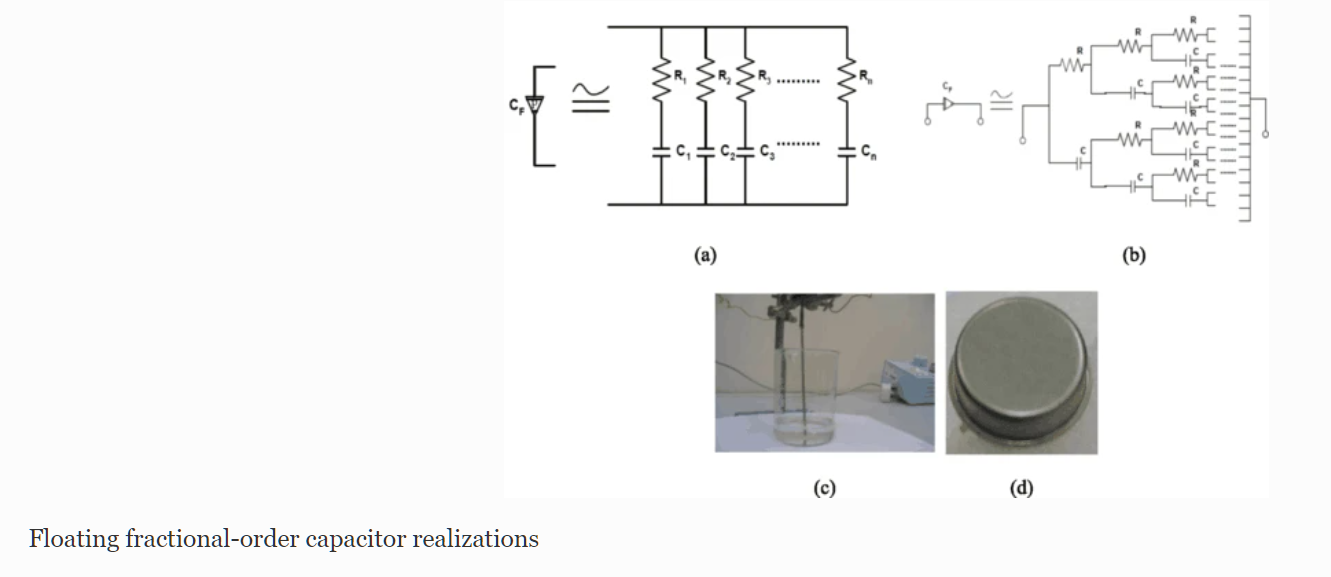
Optimization of fractional-order RLC filters
This paper introduces some generalized fundamentals for fractional-order RL β C α circuits as well as a gradient-based optimization technique in the frequency domain. One of the main advantages of the fractional-order design is that it increases the flexibility and degrees of freedom by means of the fractional parameters, which provide new fundamentals and can be used for better interpretation or best fit matching with experimental results. An analysis of the real and imaginary components, the magnitude and phase responses, and the sensitivity must be performed to obtain an optimal design
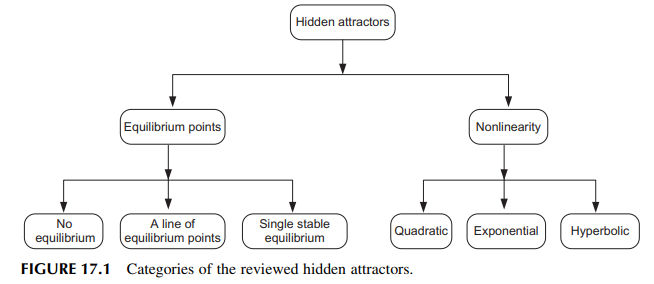
Chaotic properties of various types of hidden attractors in integer and fractional order domains
Nonlinear dynamical systems with chaotic attractors have many engineering applications such as dynamical models or pseudo-random number generators. Discovering systems with hidden attractors has recently received considerable attention because they can lead to unexpected responses to perturbations. In this chapter, several recent examples of hidden attractors, which are classified into several categories from two different viewpoints, are reviewed. From the viewpoint of the equilibrium type, they are classified into systems with no equilibria, with a line of equilibrium points, and with one