
Adaptive decentralised sliding mode controller and observer for asynchronous nonlinear large-scale systems with backlash
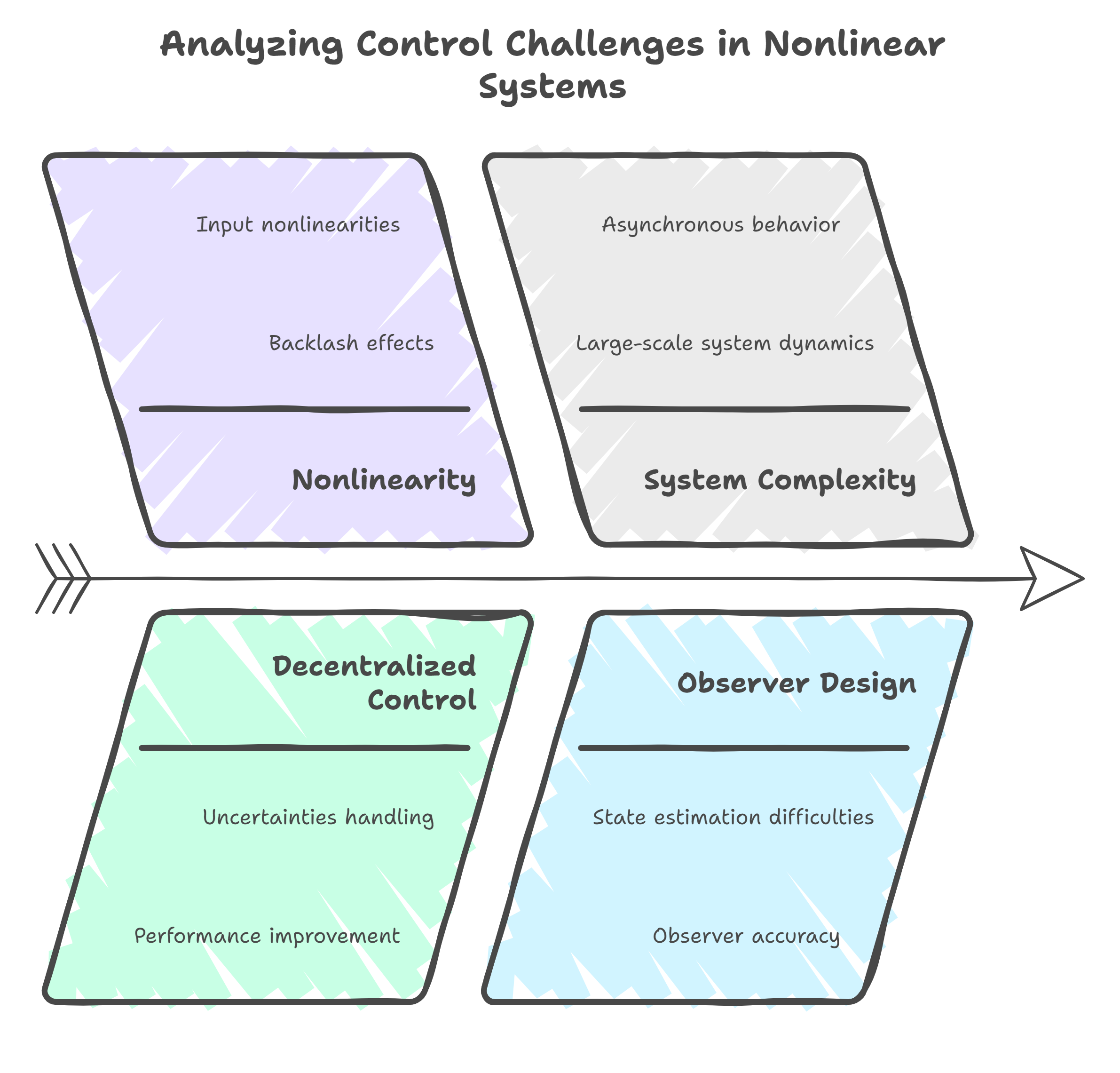
In this article an adaptive decentralised sliding mode controller and observer for asynchronous nonlinear large-scale systems with backlash is proposed. In the literature, only the synchronous case for input nonlinearities such as dead-zone and saturation is found. In this article, the asynchronous case for systems with backlash is studied considering the backlash effect. Owing to the complexity of the backlash nonlinearity, an adaptive decentralised controller is proposed because of the capability of this strategy to deal with uncertainties and to improve the system performance when this

Dynamics, synchronization and fractional order form of a chaotic system with infinite equilibria
Conventional chaotic systems, such as the Lorenz system, Rössler system, Chen system, or Lü system, have a countable number of equilibrium points. Interestingly, a few unusual systems with infinite equilibria have been discovered recently. It is worth noting that from a computational point of view, that equilibria cannot support to identify the attractors in such systems. This chapter presents a three-dimensional chaotic system with an infinite number of equilibrium points. The fundamental properties of such a system are investigated by using equilibrium analysis, phase portraits, Poincaré map
Valorization of Agricultural and Marine Waste for Fabrication of Bio-Adsorbent Sheets
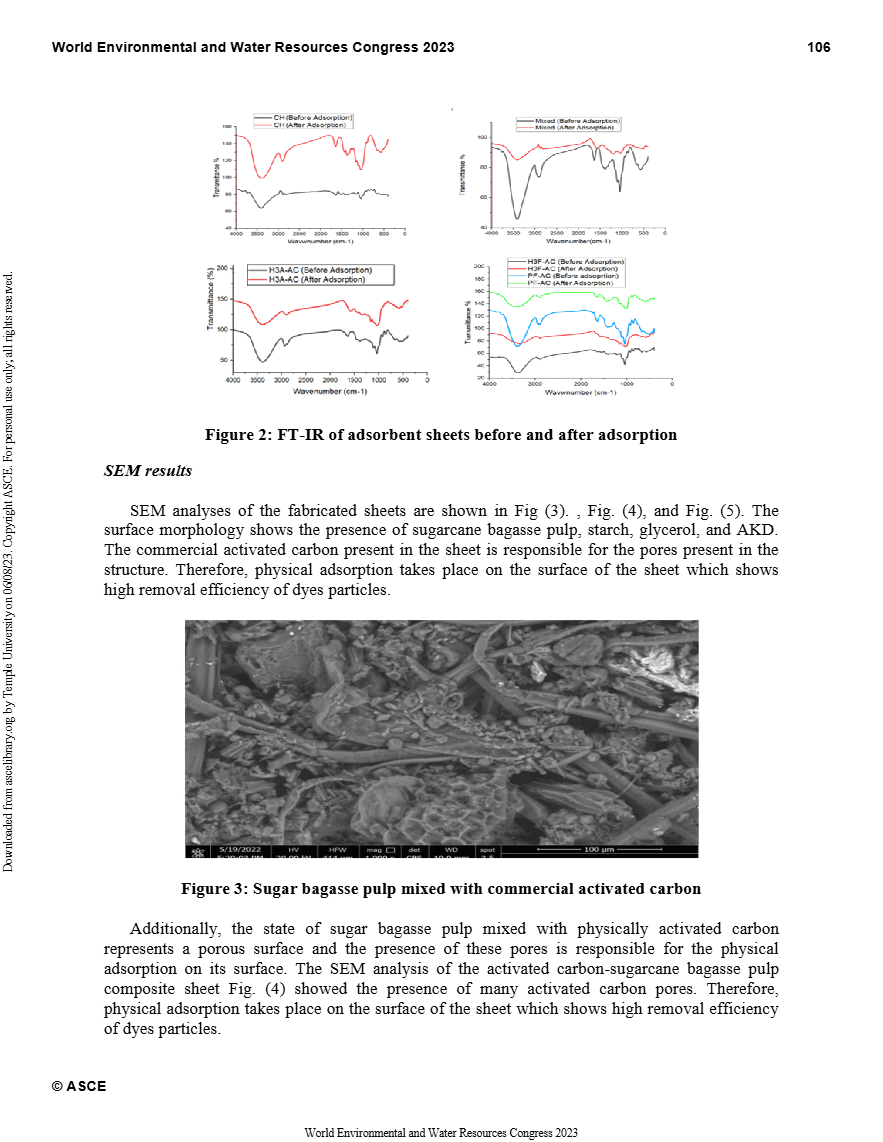
Industrial wastewater often contains considerable amounts of toxic pollutants that would endanger public health and the environment. In developing countries, these toxins are often discharged into natural ecosystems without pretreatment as it requires costly treatment processes, which causes long-term harmful socioeconomic impacts. Employing wastewater treatment plants using physical, biological, and chemical methods to clean the wastewater is considered by many nations the answer to the environmental crises. The treated water could be used for targeting the irrigation systems in its majority
Full Connectivity Driven K-LEACH Algorithm for Efficient Data Forwarding in Wireless Sensor Networks
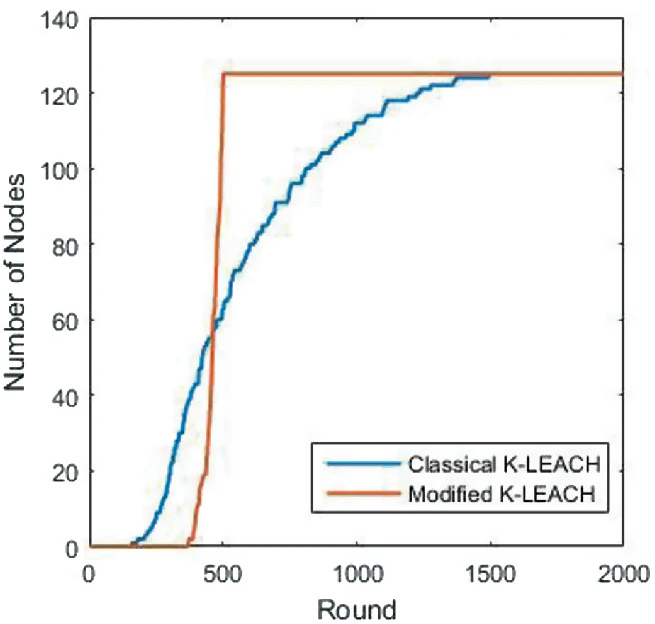
Due to the usage of Internet in everything in our life, our environment is transformed into digital society, in which everything can be accessed from anywhere. This is the main concept of Internet of Things (IoT), which consists of intelligent devices connected together without location limitation. These devices can be sensors and actuators, which are used in environmental monitoring, home automation, disaster management and more. This is the definition of Wireless Sensor Network (WSN), which is considered a subset from IoT environment. WSN consists of hundreds of nodes spread in different
Soft robotic grippers: A review on technologies, materials, and applications
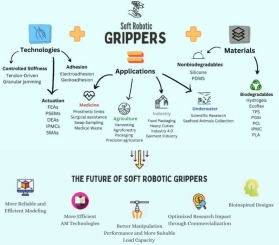
The growing need for manipulators capable of handling delicate objects with care and coexisting safely with humans has brought soft robots to the forefront as a practical and cost-effective solution. In this context, this paper aims to explore soft grippers, a unique and versatile subset of soft robots. It provides an overview of various soft grasping techniques and materials, highlighting their respective advantages and limitations, along with showcasing several designed and tested models. As medicine and agriculture are acknowledged as pivotal domains required for basic human survival, this
Review on Coral Reef Regeneration Methods through Renewable Powered Electrotherapy
The restoration of coral reef population in coastal regions is currently a growing concern. Many attempts have been made to apply new approaches to limit the deterioration of coral reefs, and to accelerate the growth of new reefs to protect coastal areas and ecosystems using available renewable energy sources. This paper highlights the new approaches and their various advantages and limitations in tidal and wave energy. The paper also suggests improvements to some of those systems using the recent developments in soft robotics, especially the use of biomimetic fish as a feasible support
Di- and tri- cyclic aromatic hydrocarbons removal using different prepared materials based Sargassum dentifolium algae, and iron oxide
Polycyclic aromatic hydrocarbons (PAHs) are highly toxic and carcinogenic compounds as they are low water solubility, hardly degradable and may persist in the environment for many years. Therefore, this study was directed to PAHs ‘anthracene and naphthalene’ removal using a combination method between adsorption and degradation using sunlight. Three adsorbent materials, iron oxide (Fe) alone, Sargassum dentifolium (S) alone, and mixture of Iron oxide and Sargassum dentifolium (FeS) were prepared. Afterwards, optimisation process was performed for the three adsorbent forms through some
Physical characterization of Cu2ZnGeSe4thin films from annealing of Cu-Zn-Ge precursor layers
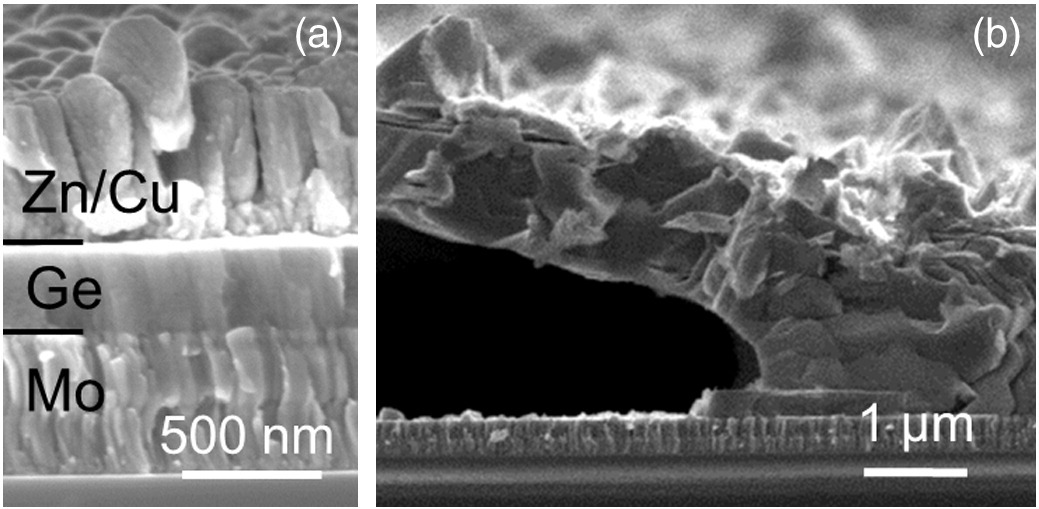
Cu2ZnGeSe4(CZGeSe) can be considered as a potential alternative for wide band gap thin film devices. In this work, CZGeSe thin films were deposited on Mo-coated soda lime glass substrates by sequential deposition of sputtered Cu, Zn and e-beam evaporated Ge layers from elemental targets followed by annealing at high temperature using H2Se gas. We report on the effect of the precursor stack order and composition and the impact of the annealing temperature on the physical properties of CZGeSe thin films. The optimal layer morphology was obtained when using a Mo/Cu/Zn/Ge precursor stack annealed
A 1 + α Order Generalized Butterworth Filter Structure and Its Field Programmable Analog Array Implementation
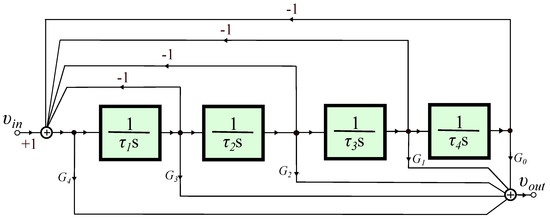
Fractional-order Butterworth filters of order 1 + (Formula presented.) (0
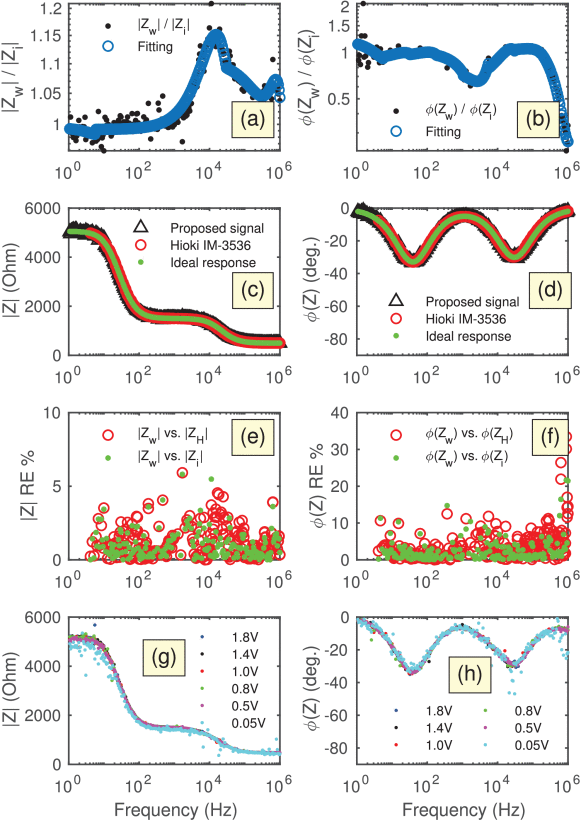
Time-Frequency Design of a Multi-Sine Excitation with Random Phase and Controllable Amplitude for (Bio) Impedance Measurements
Impedance spectroscopy has become a standard electroanalytical technique to study (bio)electrochemical and physiological systems. From an instrumentation point of view, the measurement of impedance can be carried out either in the frequency domain using the classical frequency sweep method or in the time domain using a variety of broadband signals. While time-domain techniques can be implemented with relatively simple hardware and can achieve faster acquisition time, they are still not that popular because of their lower accuracy and modularity. In this work we present a method and an