
Interdigitated C-Patch Metamaterial Antenna for Terahertz Sensing
This paper proposes a metamaterial Terahertz sensor with detected sensitivity for biomedical applications. The proposed sensor consists of two interdigitated golden C-shaped structures on top of Teflon substrate that is backed by a gold layer. The absorption spectrum contains a peak resonance corresponding to the maximum absorption of the sensor. The proposed sensor has a maximum narrow-band absorption at 3.35 THz, with an average sensitivity of 2.256 THz/RIU and a quality factor of 22.3. The developed model is checked for the range of refractive index range between n= 1.3 to n= 1.4 to check
Modeling of dark current in semispherical quantum dot structures for infrared photodetection
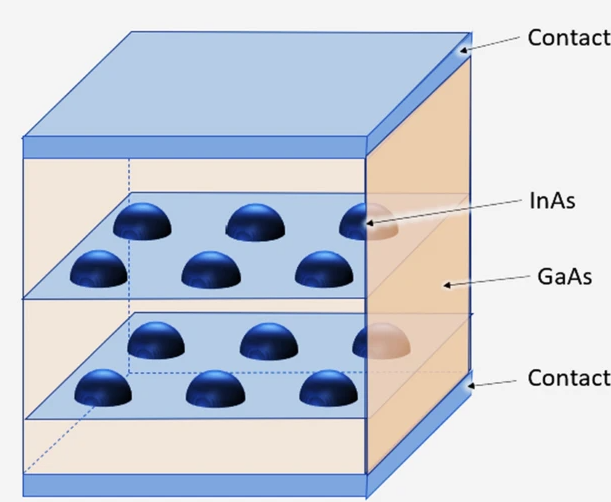
Due to its tunable heterojunction bandgap and great sensitivity to normal incident illumination, the Quantum Dot Infrared Photodetectors (QDIPs) have received a lot of attention for the purpose of infrared sensing. It could be a very promising replacement for conventional infrared photodetectors made with established technology, including mercury cadmium telluride and quantum well infrared photodetectors. In this work, a model for the dark current in semispherical QDIP has been developed, resolves the primary semiconductor Poisson's and continuity equations, where the wave function and the
Small Area and Low Power Hybrid CMOS-Memristor Based FIFO for NoC
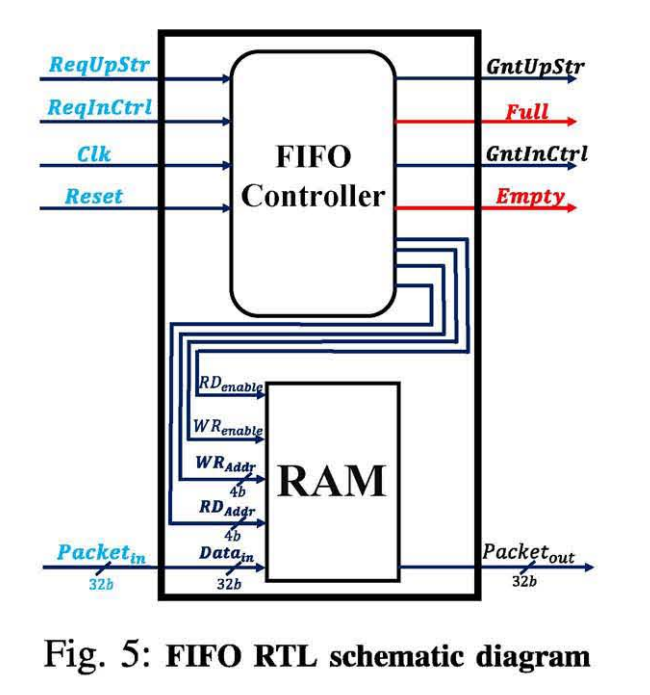
Area and power consumption are the main challenges in Network on Chip (NoC). Indeed, First Input First Output (FIFO) memory is the key element in NoC. Increasing the FIFO depth, produces an increas in the performance of NoC but at the cost of area and power consumption. This paper proposes a new hybrid CMOS-Memristor based FIFO architecture that consumes low power and has a small size compared to the conventional CMOS-based FIFOs. The predicted area is approximately equal to the half of that wasted in conventional FIFOs. The implementation of FIFO controller module is implemented using HDL

Novel Fast Prediction Algorithm for Advanced and High Efficiency Video Coding
This paper introduces an efficient prediction algorithm tailored for advanced and high efficiency video coding, encompassing both H.264 and H.265. The proposed approach aims at replacing the standard intra prediction methodology by employing a streamlined prediction mode, which significantly reduces computational overhead and system complexity while eliminating the requirement for mode decision. By leveraging block comparison criteria, the designed method combines neighboring blocks in a linear fashion to accurately represent the target block. Extensive comparisons are conducted with the H.264

Enhancement of plasmonic photovoltaics with pyramidal nanoparticles
Light trapping as a result of embedding plasmonic nanoparticles (NPs) into photovoltaics (PVs) has been recently used to achieve better optical performance compared to conventional PVs. This light trapping technique enhances the efficiency of PVs by confining incident light into hot-spot field regions around NPs, which have higher absorption, and thus more enhancement of the photocurrent. This research aims to study the impact of embedding metallic pyramidal-shaped NPs inside the PV’s active region to enhance the efficiency of plasmonic silicon PVs. The optical properties of pyramidal-shaped

Accelerated Edge Detection Algorithm for High-Speed Applications
Digital Image Processing (DIP) is a growing field for various applications, such as autonomous vehicles and video surveillance. To improve the performance of DIP systems, image processing algorithms are implemented in hardware rather than software. The idea here is primarily to get a faster system than software imaging or other alternative hardware. Field-programmable gate arrays (FPGAs) have the advantages of parallel processing, low cost, and low power consumption. These semiconductor devices contain many logic blocks that can be programmed to perform everything from basic digital gate-level

Fractional order systems: An overview of mathematics, design, and applications for engineers
Fractional Order Systems: An Overview of Mathematics, Design, and Applications for Engineers introduces applications from a design perspective, helping readers plan and design their own applications. The book includes the different techniques employed to design fractional-order systems/devices comprehensively and straightforwardly. Furthermore, mathematics is available in the literature on how to solve fractional-order calculus for system applications. This book introduces the mathematics that has been employed explicitly for fractional-order systems. It will prove an excellent material for
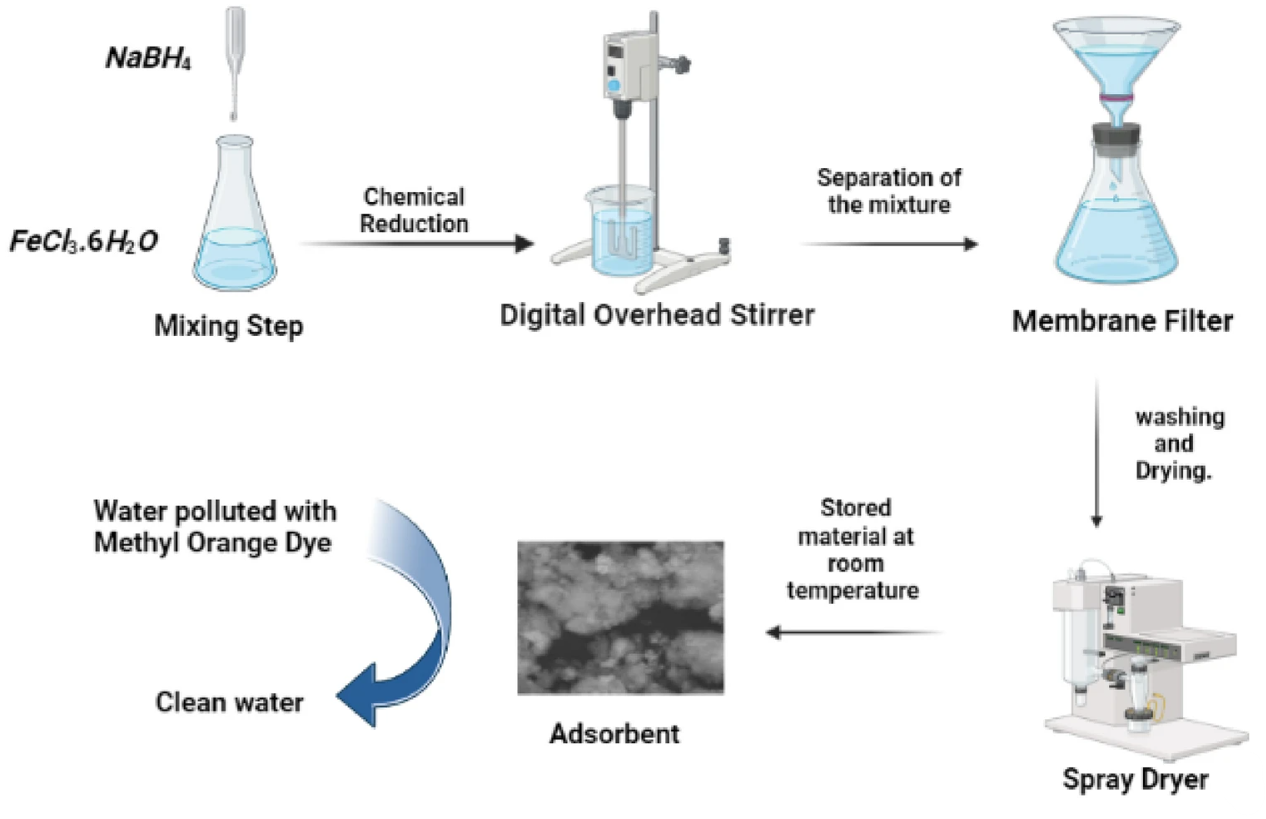
Preparation and Characterization of nZVI, Bimetallic Fe 0-Cu, and Fava Bean Activated Carbon-Supported Bimetallic AC-F e 0-Cu for Anionic Methyl Orange Dye Removal
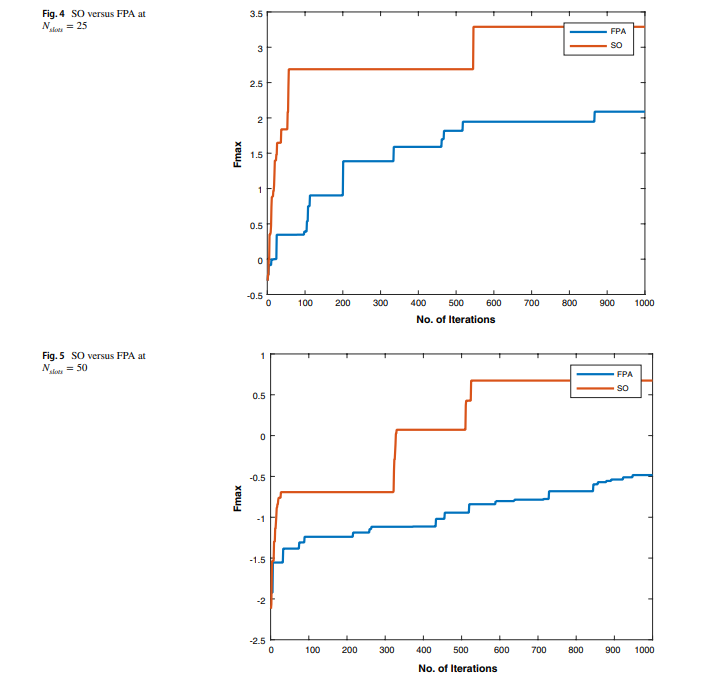
A power-aware task scheduler for energy harvesting-based wearable biomedical systems using snake optimizer
There is an increasing interest in energy harvesting for wearable biomedical devices. This requires power conservation and management to ensure long-term and steady operation. Hence, task scheduling algorithms will be used throughout this work to provide a reliable solution to minimize energy consumption while considering the system operation constraints. This study proposes a novel power-aware task scheduler to manage system operations. For example, we used the scheduler to handle system operations, including heart rate and temperature sensors. Two optimization techniques have been used to
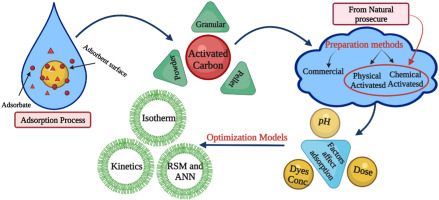
Review of activated carbon adsorbent material for textile dyes removal: Preparation, and modelling
Water contamination with colours and heavy metals from textile effluents has harmed the ecology and food chain, with mutagenic and carcinogenic effects on human health. As a result, removing these harmful chemicals is critical for the environment and human health. Various standard physicochemical and biological treatment technologies are used; however, there are still some difficulties. Adsorption is described as a highly successful technology for removing contaminants from textile-effluents wastewater compared to other methods. Several adsorbent materials, including nanomaterials, natural