

Internet of Things: A Comprehensive Overview on Protocols, Architectures, Technologies, Simulation Tools, and Future Directions
The Internet of Things (IoT) is a global network of interconnected computing, sensing, and networking devices that can exchange data and information via various network protocols. It can connect numerous smart devices thanks to recent advances in wired, wireless, and hybrid technologies. Lightweight IoT protocols can compensate for IoT devices with restricted hardware characteristics in terms of storage, Central Processing Unit (CPU), energy, etc. Hence, it is critical to identify the optimal communication protocol for system architects. This necessitates an evaluation of next-generation

Accelerated Edge Detection Algorithm for High-Speed Applications
Digital Image Processing (DIP) is a growing field for various applications, such as autonomous vehicles and video surveillance. To improve the performance of DIP systems, image processing algorithms are implemented in hardware rather than software. The idea here is primarily to get a faster system than software imaging or other alternative hardware. Field-programmable gate arrays (FPGAs) have the advantages of parallel processing, low cost, and low power consumption. These semiconductor devices contain many logic blocks that can be programmed to perform everything from basic digital gate-level

CPW-Fed Bow-Tie Antenna for Ambient RF Energy Harvesting Applications
This paper presents a high-efficiency bow-tie antenna for ambient RF energy harvesting at the 2.4 GHz band. Moreover, a rectifier circuit that converts the AC into DC is proposed. The antenna is fed via a CPW transmission line where a quarter wavelength transformer is inserted to match the slot bow-tie with the 50-ohm transmission line. The structure is simulated using CST software, and results are validated using HFSS. The antenna's directivity, efficiency, and bandwidth are 6.63 dBi, 89.9 %, and 0.946 GHz respectively, as simulated using CST. The antenna is fabricated on a single-layer

Microstrip Coupled Line Bandpass Filter: A Stochastic Model
Coupled line microstrip filter is regarded to be a strong contender for high frequency and wireless applications, due to its compact size, inexpensive cost, and simple engineering manufacturing. The stochastic study of the proposed microstrip filter, based on the Monte Carlo Model, presented in this paper explores the uncertainties in the microstrip filter's design parameters and their influence on the filter's functionality. The filter's microstrip thickness, lengths, and spacing are all considered as design factors. The analysis investigates the variation of the standard deviations, the mean

IoT Microchip AVR Microcontroller's Fuses and Lock Bits High Voltage Programmer
This paper proposes a reliable wireless configuration bits programmer for remotely resetting incorrectly-written Microchip AVR microcontrollers' Fuses and Lock Bits. The incorrect configuration bits programming leads critically to a micro-controller malfunction which requires correct reprogramming. The proposed programmer utilizes Wi-Fi for enabling the remote configuration bits programming via a PC or a smart mobile device. It employs the Microchip AVR High Voltage Parallel and Serial Programming protocols which uniquely support the configuration bits programming feature. The configuration

Pseudo Random Number Generators Employing Three Numerical Solvers of Chaotic Generators
Pseudo-Random Number Generator (PRNG) is required for various applications, especially cryptography. PRNGs are employed in symmetric-key algorithms, where a single key is used as a seed to the PRNG to generate a sequence of random numbers that are employed to encrypt and decrypt certain data. This work proposes a PRN G system that employs the time series generated from the numerical solution of systems of chaotic-generators Differential Equations (DEs) utilizing three different DEs solvers; Euler, Runge-Kutta 4th order, and Runge-Kutta 5th order. Various systems were solved using each of the

Novel Edge AI with Power-Efficient Re-configurable LP-MAC Processing Elements
Deep learning has become increasingly important in various fields, such as robotics, image processing, and speech recognition. However, the high computational requirements of deep learning models make it challenging to deploy them on edge & embedded devices with constrained power and area budgets. This paper proposes a novel low-power technique for implementing deep learning models on edge devices called LP-MAC (Low Power Multiply Accumulate). LP-MAC is designed for fixed-point format operations and takes advantage of reusing the input vector for MAC operations. It provides a new hardware

A Robust Deep Learning Detection Approach for Retinopathy of Prematurity
Retinal retinopathy of prematurity (ROP), an abnormal blood vessel formation, can occur in a baby who was born early or with a low birth weight. It is one of the primary causes of newborn blindness globally. Early detection of ROP is critical for slowing and stopping the progression of ROP-related vision impairment which leads to blindness. ROP is a relatively unknown condition, even among medical professionals. Due to this, the dataset for ROP is infrequently accessible and typically extremely unbalanced in terms of the ratio of negative to positive images and the ratio of each stage of it

Threshold Energy Based LEACH-K Effect on the Accessibility of Wireless Sensor Networks
This paper aims to deliver an exhaustive investigation on the threshold energy parameter's direct impact on the Cluster Head (CH) selection phase in Low-Energy Adaptive Clustering Hierarchy Based on K-Means (LEACH-K) protocols. The most prominent threshold energy selection criterion out of the scarcely available research on the LEACH-K threshold energy parameter is used to simulate the LEACH-K protocol. Simulations are carried out on scaled-up Wireless Sensor Networks (WSNs) in terms of size and number of nodes. An analysis is performed on the life-cycle of the CH selection process, which
Parameter Identification of Li-ion Batteries: A Comparative Study
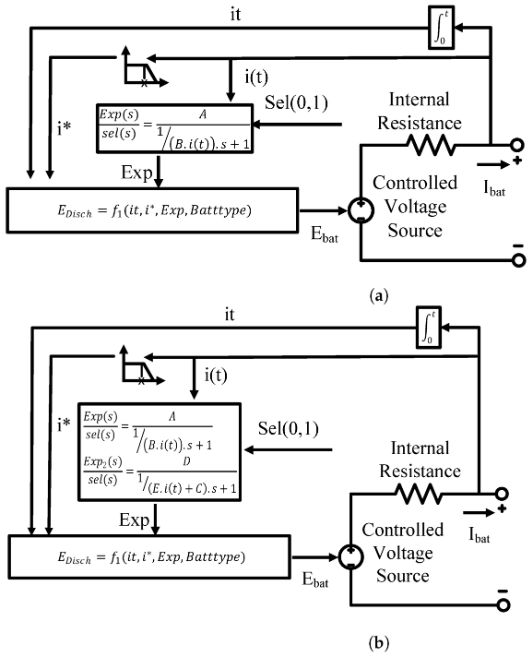
Lithium-ion batteries are crucial building stones in many applications. Therefore, modeling their behavior has become necessary in numerous fields, including heavyweight ones such as electric vehicles and plug-in hybrid electric vehicles, as well as lightweight ones like sensors and actuators. Generic models are in great demand for modeling the current change over time in real-time applications. This paper proposes seven dynamic models to simulate the behavior of lithium-ion batteries discharging. This was achieved using NASA room temperature random walk discharging datasets. The efficacy of